Gemini Notebook vs ResearchRabbit
Plans, free access, limits and intended use side by side, taken from each vendor’s own pages. No score and no winner: the facts show where the two differ.
Change tools
Cited answers and study material from your own sources.

Citation-network literature discovery that grows a search from seed papers
- Free access
- Gemini Notebook: Free access
- ResearchRabbit: Free access
- Paid from
- Gemini Notebook: USD 4.99 per month
- ResearchRabbit: USD 12.50 per month
- Plans listed
- Gemini Notebook: 5
- ResearchRabbit: 4
- Public API
- Gemini Notebook: Yes
- ResearchRabbit: Not confirmed
Where Gemini Notebook and ResearchRabbit differ
- Pricing checkPricing review due for Gemini Notebook; prices confirmed for ResearchRabbit.
- PlansGemini Notebook lists 5 plans and ResearchRabbit lists 4.
Head to head
Each value from the tool’s profile and the vendor’s own pages
| Gemini Notebook | Fact | ResearchRabbit |
|---|---|---|
| Access and price | ||
| Free access availableStandard | Free accessSame | Free access availableFree · USD 0 |
| USD 4.99 per monthGoogle AI Plus · Germany: EUR 4.99 | Lowest listed paid plan | USD 12.50 per monthResearchRabbit+ (monthly) |
| Free; Google AI plans from USD 4.99/month | Pricing model | Free plan; ResearchRabbit+ $12.50 a month or $120 a year |
| 5 | Plans listedDiffers | 4 |
| Yes | Public API | Not confirmed |
| Not confirmed | Card to start | Not confirmed |
| No | Open sourceSame | No |
| What it is for | ||
| Cited answers from your own documents | Built for | Widening a literature review from a few known papers through citations and co-authors |
| Research & sources | CategorySame | Research & sources |
| Platforms |
|
| Not listed | Works with |
|
| How current | ||
| Profile sources checked | ||
| Pricing review due · Sep 24, 2026 | Pricing checkDiffers | Prices confirmed · Oct 24, 2026 |
Official source check for both tools. No hands-on testing and no score: “Differs” marks a documented difference, not a better tool.
Plans and prices
Gemini Notebook
Pricing review due · Sep 24, 2026- StandardFreewith a Google account
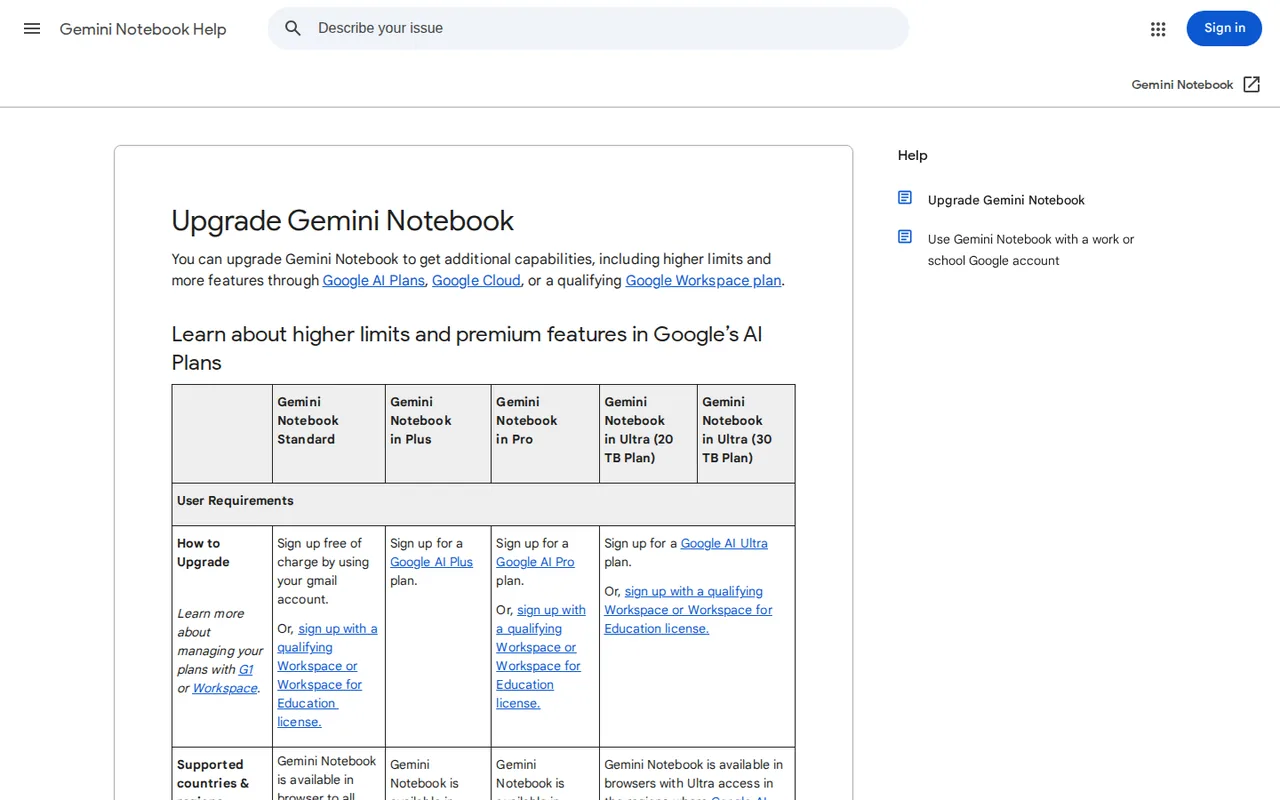
- Google AI PlusUSD 4.99 per monthGermany: EUR 4.99
- Google AI ProUSD 19.99 per monthGermany: EUR 21.99
- Google AI UltraUSD 99.99 per month, 5x tier with 20 TB storage20x tier with 30 TB: USD 199.99 per month; Germany: EUR 99.99 / EUR 219.99
- Workspace or Google CloudCustom pricing through your organizationno separate Notebook price
ResearchRabbit
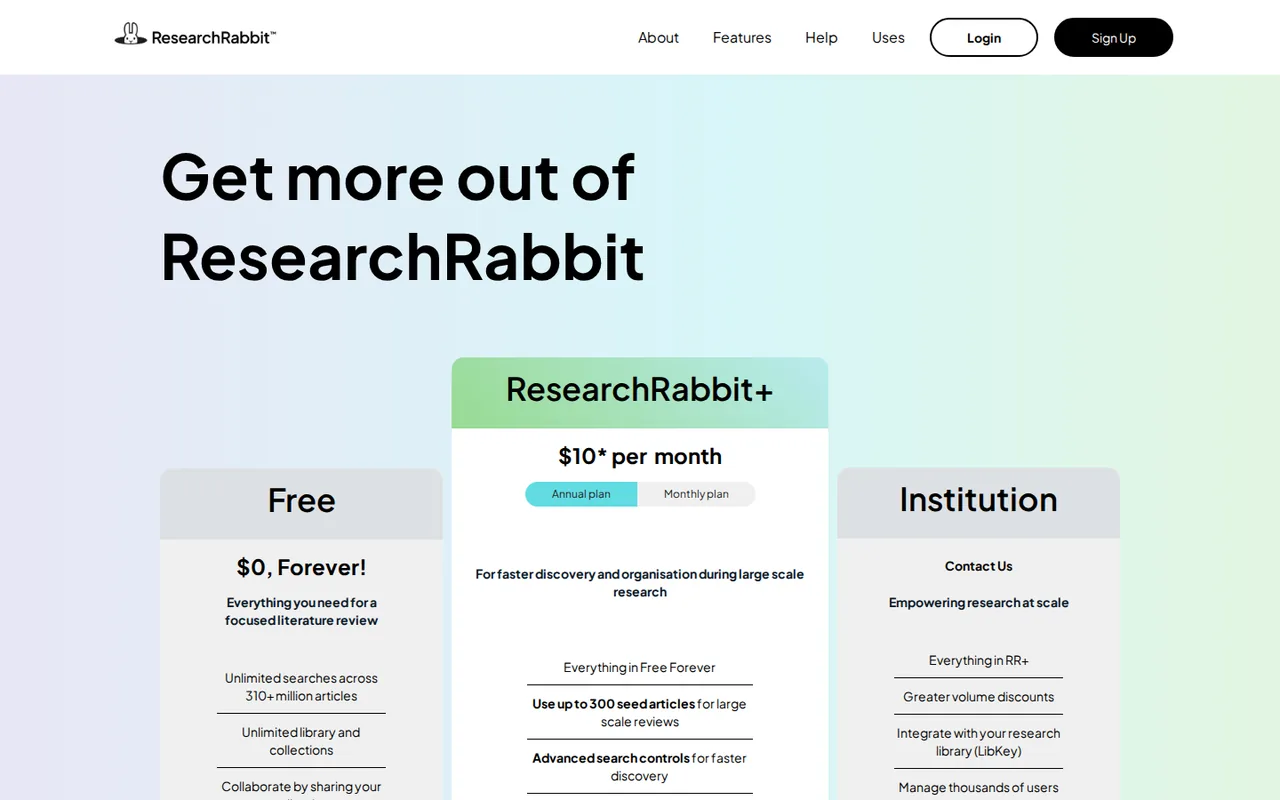
Prices confirmed · Oct 24, 2026- FreeUSD 0
- ResearchRabbit+ (annual)USD 120 per yearUSD 10 a month
- ResearchRabbit+ (monthly)USD 12.50 per month
- InstitutionCustomcontact sales
Strengths and limits
Gemini Notebook
Strengths
- Multiple source formats: Bring PDFs, websites, YouTube videos, audio files, Google Docs and Slides into a research notebook.
- Cited answers: Source-grounded answers include citations that let you inspect the underlying material.
- Ongoing Standard access: A free Standard tier is available without a paid subscription, subject to usage limits.
Limits to plan around
- Source allowance: Standard notebooks stop at 50 sources; bigger collections must be split across notebooks or moved to a paid plan.
- Variable AI usage: Long chats, complex prompts and heavy Studio features use more of the compute quota, so the number of actions per day varies.
- Region-limited paid tiers: Google AI Plus, Pro and Ultra are sold only in specific regions, and Ultra is limited to users over 18.
ResearchRabbit
Strengths
- Unlimited searches on Free: Searches, the library and collections are unlimited at $0; the limit is the number of seeds per search.
- Stated data stance: The help center says ResearchRabbit does not sell articles or notes and does not train AI models on them.
- Standard exports: Collections export to BibTeX, RIS or CSV, so a reference manager can take them over.
Limits to plan around
- Metadata-only coverage: Only articles with open access metadata can be indexed, so some papers, citations and references are missing.
- One-way Zotero link: Zotero collections import, but papers go back only as a BibTeX export; two-way sync is still in development.
- Monthly price stated two ways: The pricing FAQ calls $10 a month the default price, while the plan card shows $12.50 for monthly billing and $10 a month only on the annual plan.
See both products
Start from your task, not from a winner.
Run both tools on the same real task, then compare the result, how much editing it needs and how fast it uses your plan’s allowance.
How we reviewChange this pair
Choose tools
Choose two tools below. You can replace either selection at any time.
Audio & voice
Automation
Coding
Data & spreadsheets
Images & design
Presentations
Research & sources
Video & editing
Website builders
Writing & content
Comparing tools from different categories is fine, and often useful — a writing assistant and a research tool solve different halves of the same job. The table will show you exactly where they diverge.
Questions about comparing tools
How does the comparison work?
Add two tools to the comparison tray from any tool card, then open this page. The table pulls each tool's verified plan details, platforms, strengths and limits from its profile, so both columns carry the same kind of evidence, with a separate source-check date for each tool.
Do you declare a winner?
No. The table sets two tools against each other on documented facts, not on a score. Which one wins depends on your task, your budget and your usage volume — three things we cannot see from here.
Why are some cells empty or marked unverified?
Because we could not confirm that detail on the vendor's own pages. Rather than filling the gap with a figure from elsewhere, we mark it and say why on the tool's profile.
Can I compare more than two tools?
Not at once. Two columns keep the differences readable and force a real decision. Remove either selected tool to replace it, or clear both to start a new pair.
Every figure in the table above comes from the linked profile, where the source and the verification date are listed. Browse all tools or read the editorial policy.