Studley vs Semantic Scholar
Plans, free access, limits and intended use side by side, taken from each vendor’s own pages. No score and no winner: the facts show where the two differ.
Change tools
AI study tool that turns documents, lecture recordings, YouTube videos and text into flashcards, quizzes, notes, podcasts and an AI tutor

Free academic search engine from Ai2 with AI summaries, citation signals, Research Feeds and an open API
- Free access
- Studley: Free access
- Semantic Scholar: Free access
- Paid from
- Studley: USD 8.17 per month
- Semantic Scholar: No fixed price listed
- Plans listed
- Studley: 2
- Semantic Scholar: 3
- Public API
- Studley: Not confirmed
- Semantic Scholar: Yes
Where Studley and Semantic Scholar differ
- PlansStudley lists 2 plans and Semantic Scholar lists 3.
Head to head
Each value from the tool’s profile and the vendor’s own pages
| Studley | Fact | Semantic Scholar |
|---|---|---|
| Access and price | ||
| Free access availableFree · USD 0 per month | Free accessSame | Free access availableWithout an account · USD 0 |
| USD 8.17 per monthStudley Pro · billed $97.99 per year | Lowest listed paid plan | No fixed price listed |
| Free; Pro $8.17 a month, billed $97.99 per year | Pricing model | Free; no paid plan; API keys free |
| 2 | Plans listedDiffers | 3 |
| Not confirmed | Public API | Yes |
| Not confirmed | Card to start | Not required |
| Not confirmed | Open source | Not confirmed |
| What it is for | ||
| Students who study from their own documents and recordings and want flashcards, quizzes, a tutor and podcasts from one upload, and who accept a small weekly allowance on the free plan | Built for | Searching and monitoring scientific literature for free, by hand or through an API |
| Research & sources | CategorySame | Research & sources |
| Platforms |
|
| Not listed | Works with |
|
| How current | ||
| Profile sources checked | ||
| Prices confirmed · Nov 5, 2026 | Pricing checkSame | Prices confirmed · Oct 24, 2026 |
Official source check for both tools. No hands-on testing and no score: “Differs” marks a documented difference, not a better tool.
Plans and prices
Studley
Prices confirmed · Nov 5, 2026- FreeUSD 0 per month
- Studley ProUSD 8.17 per monthbilled $97.99 per year
Semantic Scholar
Prices confirmed · Oct 24, 2026- Without an accountUSD 0
- Free accountUSD 0
- API keyUSD 0
Strengths and limits
Studley
Strengths
- Many study formats from one upload: The homepage lists flashcards, quizzes, written tests, tutor lessons, fill-in-the-blanks and podcasts from the same material.
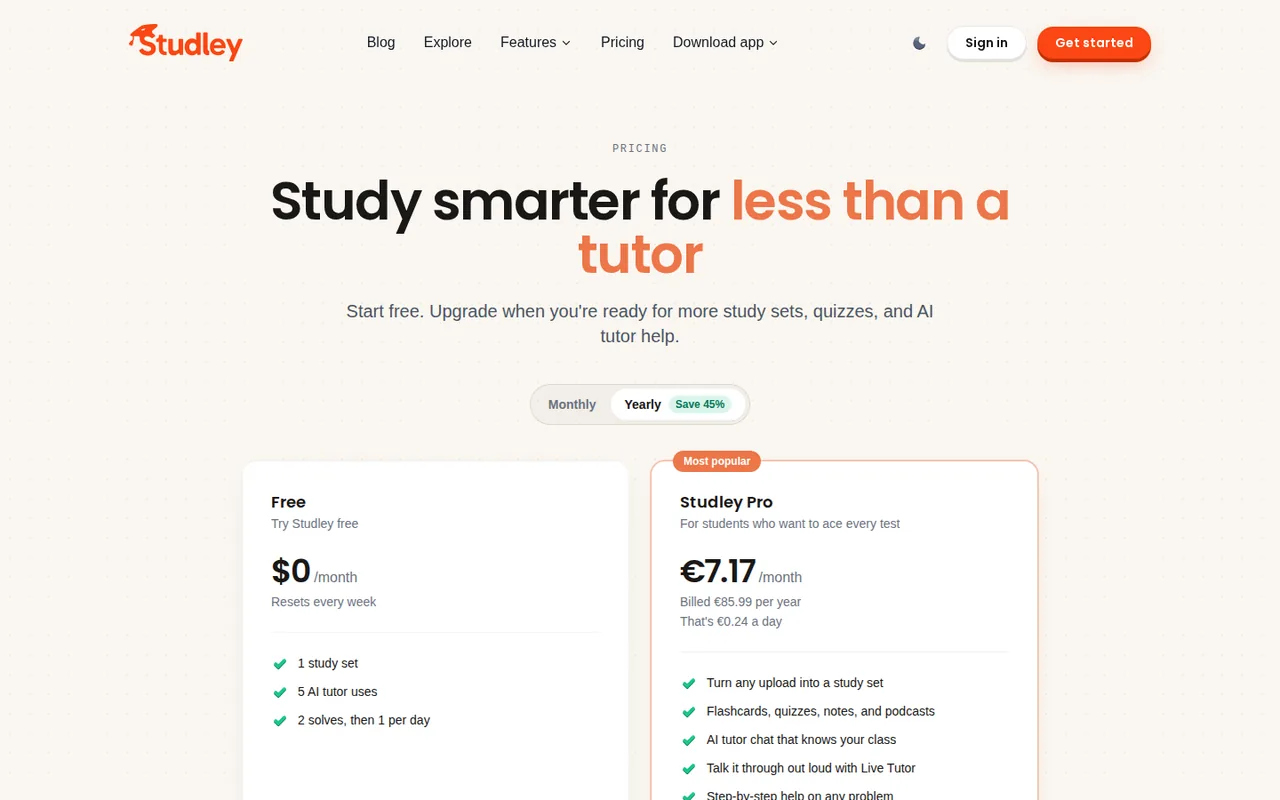
- Free plan to try it: The pricing page shows a $0 plan that resets every week.
- Annual price is stated: The pricing page shows Pro as $97.99 per year.
Limits to plan around
- Monthly-billing price not shown: The homepage says you can pay monthly or yearly, but the pricing page showed only the annual amount and its $8.17 monthly equivalent.
- Free allowance is small: The free plan is 1 study set, 5 AI tutor uses and 2 solves, then 1 per day, each week.
- Subscriptions are non-refundable: The Terms say fees are non-refundable except the grade guarantee or where the law requires a refund.
Semantic Scholar
Strengths
- Free without an account: Search, paper pages and citation data open without signing in.
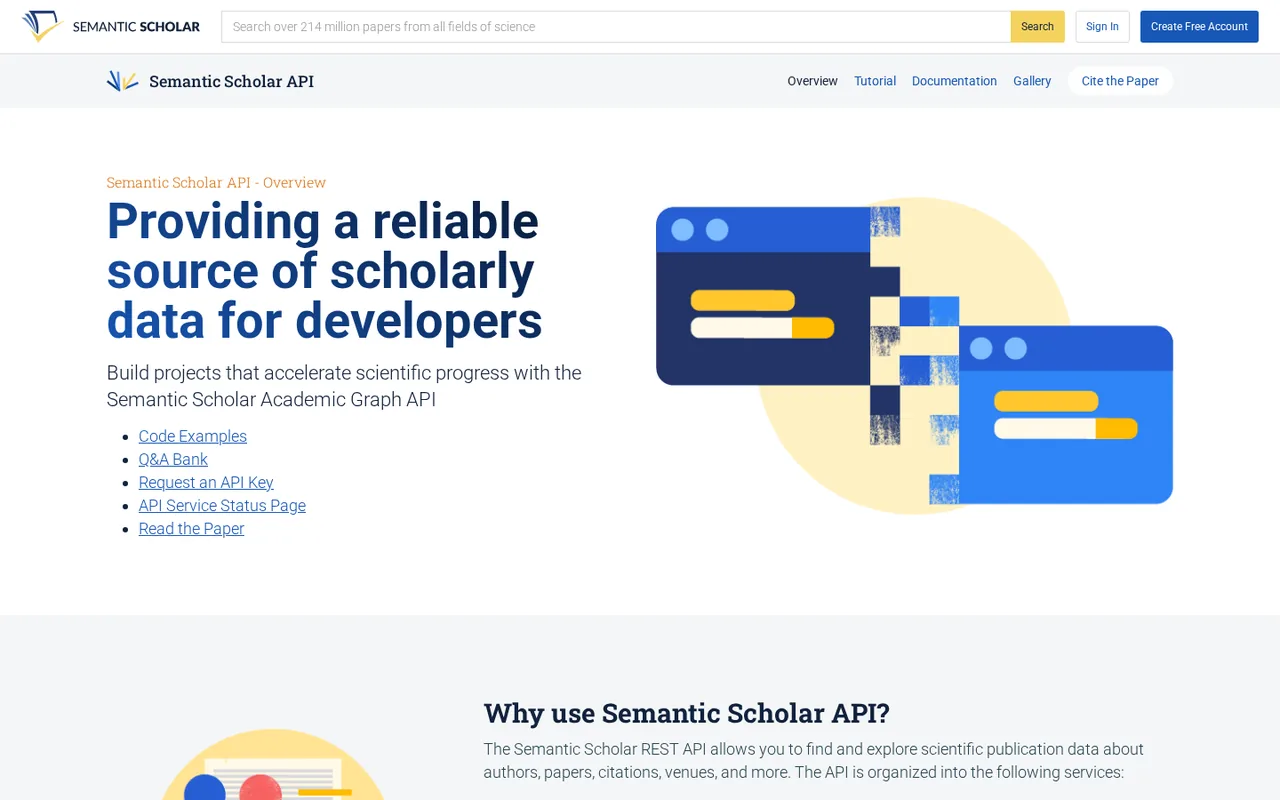
- Published API limits: The API page states the shared rate for calls without a key and the starting rate for a key.
- Institutional full text: Signing in through OpenAthens, eduGAIN or InCommon links to subscribed PDFs through GetFTR and LibKey.
Limits to plan around
- TLDRs in two fields only: One-sentence AI summaries cover computer science and biomedical papers.
- Simple query language: Search has no Boolean operators or wildcards and does not expand abbreviations; quoted phrases work.
- Thin book and patent coverage: Book coverage is very limited and patents are excluded, so counts differ from other indexes.
See both products
Start from your task, not from a winner.
Run both tools on the same real task, then compare the result, how much editing it needs and how fast it uses your plan’s allowance.
How we reviewChange this pair
Choose tools
Choose two tools below. You can replace either selection at any time.
Audio & voice
Automation
Coding
Data & spreadsheets
Images & design
Presentations
Research & sources
Video & editing
Website builders
Writing & content
Comparing tools from different categories is fine, and often useful — a writing assistant and a research tool solve different halves of the same job. The table will show you exactly where they diverge.
Questions about comparing tools
How does the comparison work?
Add two tools to the comparison tray from any tool card, then open this page. The table pulls each tool's verified plan details, platforms, strengths and limits from its profile, so both columns carry the same kind of evidence, with a separate source-check date for each tool.
Do you declare a winner?
No. The table sets two tools against each other on documented facts, not on a score. Which one wins depends on your task, your budget and your usage volume — three things we cannot see from here.
Why are some cells empty or marked unverified?
Because we could not confirm that detail on the vendor's own pages. Rather than filling the gap with a figure from elsewhere, we mark it and say why on the tool's profile.
Can I compare more than two tools?
Not at once. Two columns keep the differences readable and force a real decision. Remove either selected tool to replace it, or clear both to start a new pair.
Every figure in the table above comes from the linked profile, where the source and the verification date are listed. Browse all tools or read the editorial policy.