Slite vs AIWriteBook
Plans, free access, limits and intended use side by side, taken from each vendor’s own pages. No score and no winner: the facts show where the two differ.
Change tools
AI knowledge base for teams that searches across connected tools and drafts updates to outdated docs for the owner to approve

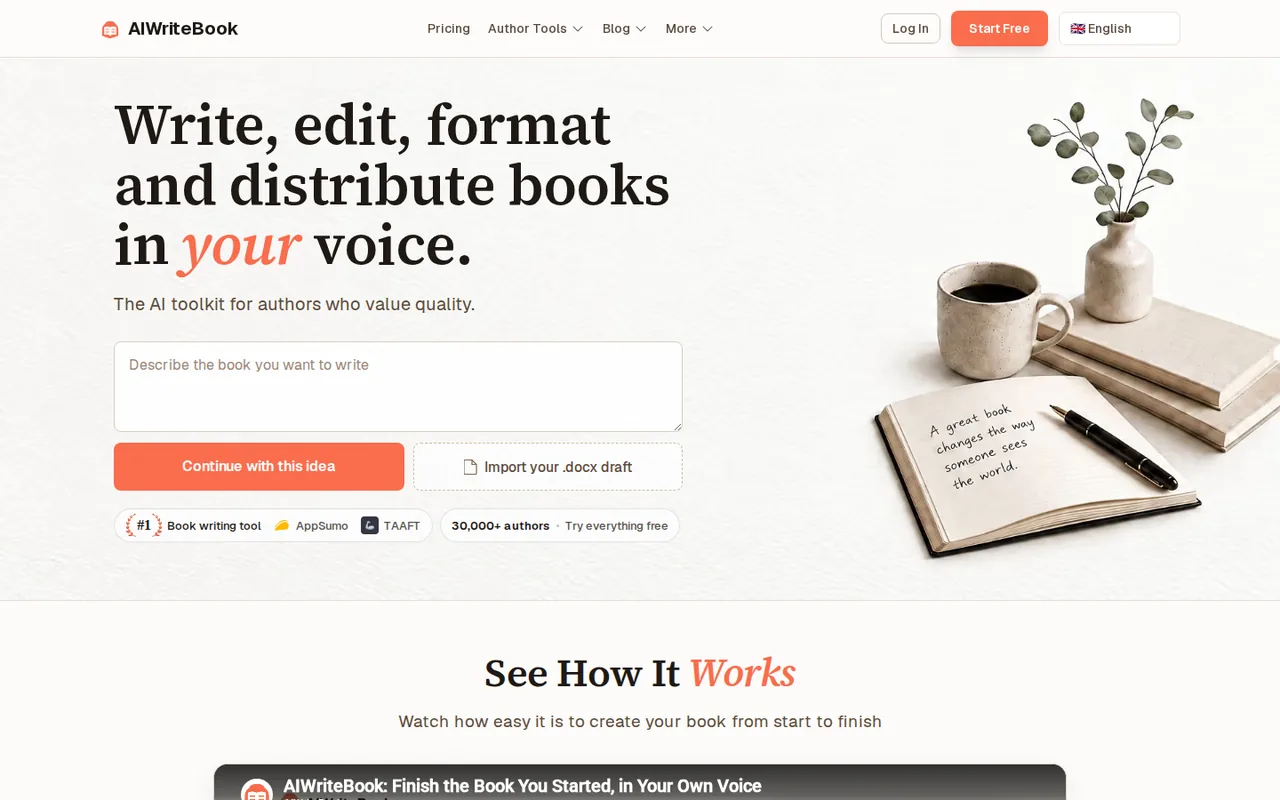
Plan, write, edit, format and publish a book with AI, with a cover and audiobook on higher plans
- Free access
- Slite: Free trial only
- AIWriteBook: Free access
- Paid from
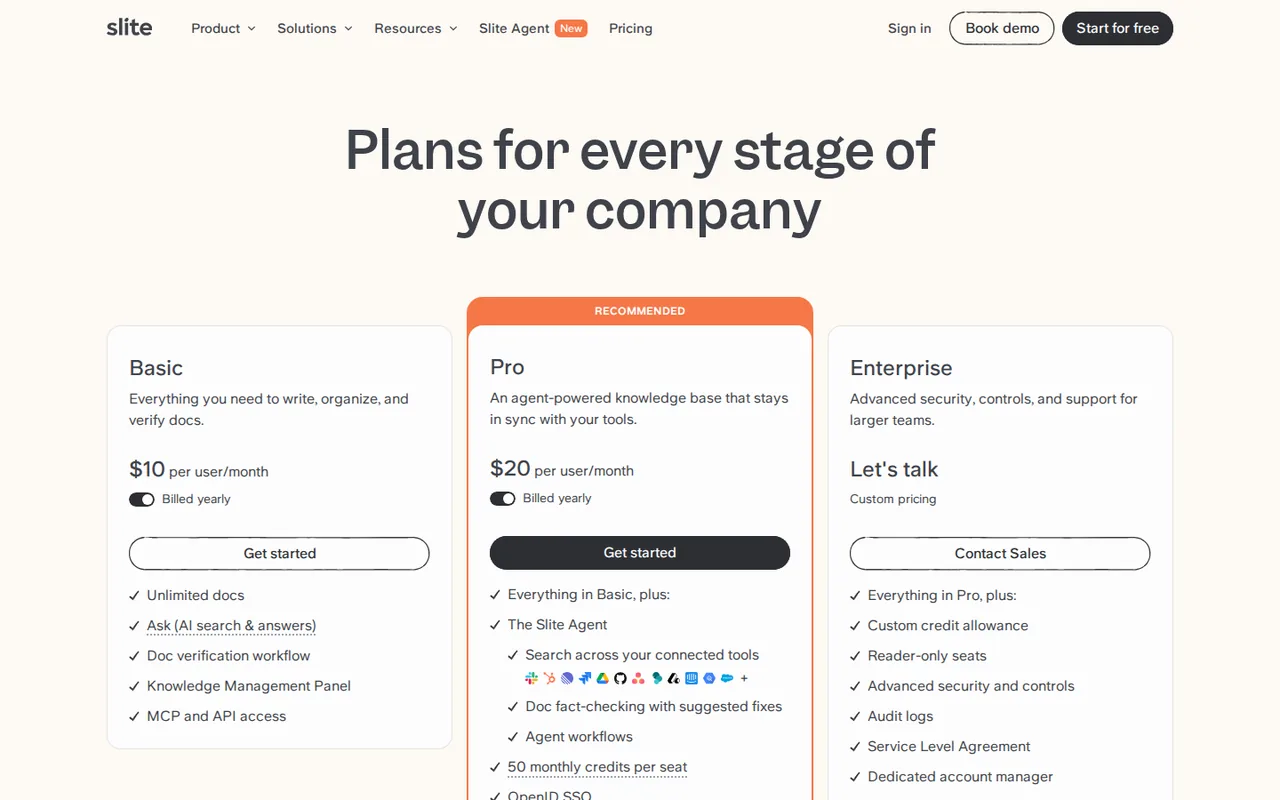
- Slite: USD 10 per user per month
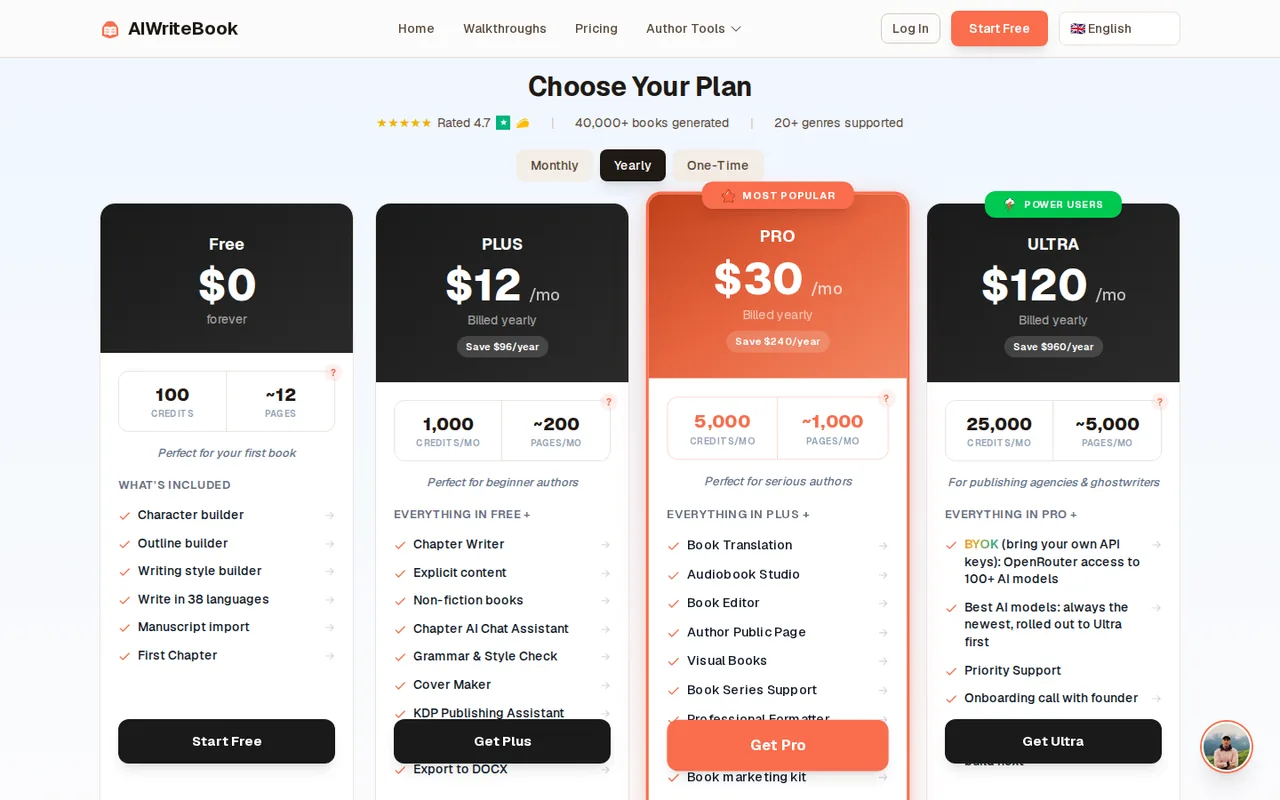
- AIWriteBook: USD 20 per month
- Plans listed
- Slite: 4
- AIWriteBook: 5
- Public API
- Slite: Not confirmed
- AIWriteBook: Not confirmed
Where Slite and AIWriteBook differ
- AccessSlite offers a free trial only, while AIWriteBook offers free access.
- PlansSlite lists 4 plans and AIWriteBook lists 5.
Head to head
Each value from the tool’s profile and the vendor’s own pages
| Slite | Fact | AIWriteBook |
|---|---|---|
| Access and price | ||
| Free trial onlyFree trial · USD 0 for 14 days; no credit card | Free accessDiffers | Free access availableFree · USD 0 |
| USD 10 per user per monthBasic · billed yearly | Lowest listed paid plan | USD 20 per monthPlus · or $12 per month billed yearly · $144 a year |
| 14-day free trial; Basic $10, Pro $20 per user a month, billed yearly | Pricing model | Free plan (100 credits); paid from $12 a month billed yearly |
| 4 | Plans listedDiffers | 5 |
| Not confirmed | Public API | Not confirmed |
| Not confirmed | Card to start | Not confirmed |
| Not confirmed | Open source | Not confirmed |
| What it is for | ||
| Teams that want one verified internal knowledge base with AI search and are fine paying per seat from day one, since the only free access is a 14-day trial | Built for | Self-publishing authors, ghostwriters and non-fiction writers who want one place to outline, draft in their own style, edit and prepare a book for Amazon KDP |
| Writing & content | CategorySame | Writing & content |
| Platforms |
|
| Works with |
|
| How current | ||
| Profile sources checked | ||
| Prices confirmed · Nov 11, 2026 | Pricing checkSame | Prices confirmed · Oct 17, 2026 |
Official source check for both tools. No hands-on testing and no score: “Differs” marks a documented difference, not a better tool.
Plans and prices
Slite
Prices confirmed · Nov 11, 2026- Free trialUSD 0 for 14 days; no credit card
- BasicUSD 10 per user per monthbilled yearly
- ProUSD 20 per user per monthbilled yearly
- EnterpriseCustom pricing
AIWriteBook
Prices confirmed · Oct 17, 2026- FreeUSD 0
- PlusUSD 20 per monthor $12 per month billed yearly · $144 a year
- ProUSD 50 per monthor $30 per month billed yearly · $360 a year
- UltraUSD 200 per monthor $120 per month billed yearly
- One-time creditsUSD 20 for 250 creditsor $50 for 2,000 credits
Strengths and limits
Slite
Strengths
- Free access is clearly time-limited: The pricing page says the 14-day trial needs no credit card and covers everything in Basic and Pro, so a team can try the agent features before paying.
- Credit rules are written down: Pro adds 50 credits per seat to a pool shared by the workspace, the allowance resets on the billing date, and admins can buy top-ups at $10 per 100 credits that stay valid for a year.
- Plain AI writing does not use credits: The pricing page says inline AI writing, translation and grammar tools do not use credits; only Slite Agent requests do.
Limits to plan around
- No permanent free plan: The only free access on the pricing page is the 14-day trial; after it a workspace admin must buy a plan to keep using Slite.
- Monthly-billing prices not shown: Basic and Pro are shown as billed yearly. The FAQ mentions a monthly plan, but no monthly amount appeared on the page read.
- AI search is capped on Basic: Basic includes 30 monthly questions per seat and 30 AI edits a month per user, and search across connected tools starts at Pro.
AIWriteBook
Strengths
- Free plan with no card: The pricing FAQ says you can plan a full book and get a first chapter free, with no credit card required.
- Content stays yours: The terms say you keep ownership and commercial rights to what you create, and the privacy policy says your content is not used to train its models or by its AI providers.
- Credit costs are published: The terms list per-action credit costs, so you can estimate a book before paying.
Limits to plan around
- Pages disagree on credit expiry: The pricing FAQ says unused subscription credits expire after a month, while the terms say Pro credits roll over for up to 3 months.
- Audiobooks are credit-heavy: At the terms' rate a 2,000-word chapter costs about 880 credits, so a full audiobook can outrun a plan's monthly allowance.
- Refunds are narrow: The terms allow a refund only within 7 days of the first subscription purchase and with under 50% of credits used; renewals and one-time credit packs are non-refundable.
See both products
Start from your task, not from a winner.
Run both tools on the same real task, then compare the result, how much editing it needs and how fast it uses your plan’s allowance.
How we reviewChange this pair
Choose tools
Choose two tools below. You can replace either selection at any time.
Audio & voice
Automation
Coding
Data & spreadsheets
Images & design
Presentations
Research & sources
Video & editing
Website builders
Writing & content
Comparing tools from different categories is fine, and often useful — a writing assistant and a research tool solve different halves of the same job. The table will show you exactly where they diverge.
Questions about comparing tools
How does the comparison work?
Add two tools to the comparison tray from any tool card, then open this page. The table pulls each tool's verified plan details, platforms, strengths and limits from its profile, so both columns carry the same kind of evidence, with a separate source-check date for each tool.
Do you declare a winner?
No. The table sets two tools against each other on documented facts, not on a score. Which one wins depends on your task, your budget and your usage volume — three things we cannot see from here.
Why are some cells empty or marked unverified?
Because we could not confirm that detail on the vendor's own pages. Rather than filling the gap with a figure from elsewhere, we mark it and say why on the tool's profile.
Can I compare more than two tools?
Not at once. Two columns keep the differences readable and force a real decision. Remove either selected tool to replace it, or clear both to start a new pair.
Every figure in the table above comes from the linked profile, where the source and the verification date are listed. Browse all tools or read the editorial policy.