MusicGPT vs Granola
Plans, free access, limits and intended use side by side, taken from each vendor’s own pages. No score and no winner: the facts show where the two differ.
Change tools
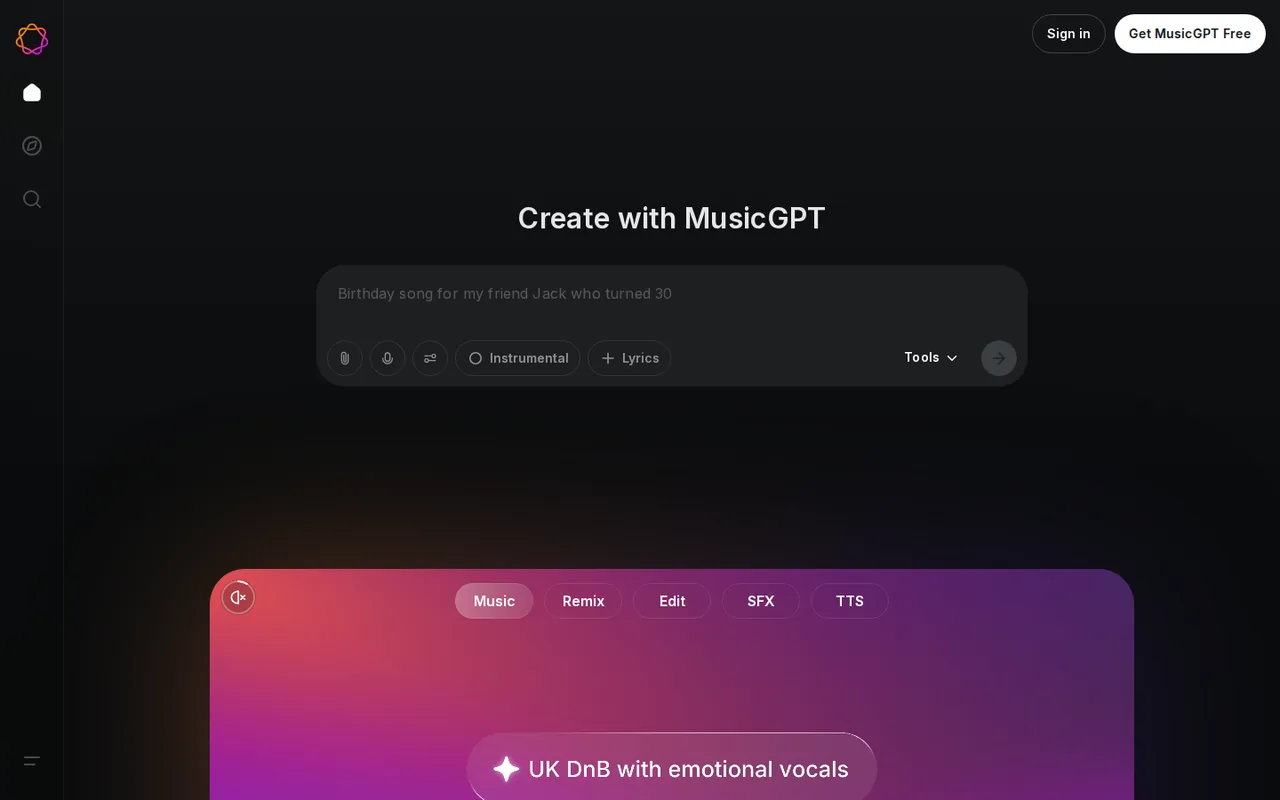
AI music generator that turns a text prompt or lyrics into full songs, sound effects and samples, with a free plan and paid plans from $9.99 a month billed annually

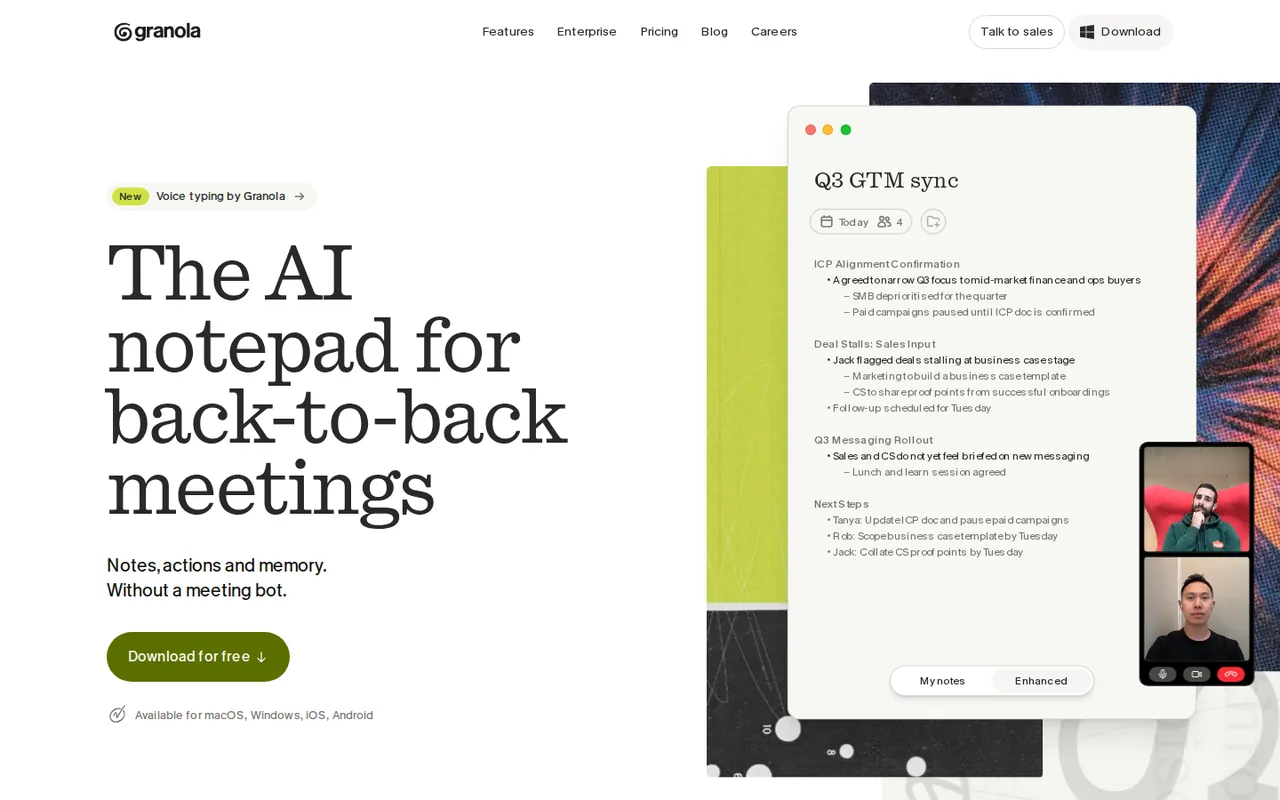
AI notepad for meetings that records your computer audio instead of sending a bot, with a free plan limited to 30 days of history
- Free access
- MusicGPT: Free access
- Granola: Free access
- Paid from
- MusicGPT: USD 11.99 per month billed monthly
- Granola: USD 14 per user per month
- Plans listed
- MusicGPT: 4
- Granola: 3
- Public API
- MusicGPT: Not confirmed
- Granola: Not confirmed
Where MusicGPT and Granola differ
- PlansMusicGPT lists 4 plans and Granola lists 3.
Head to head
Each value from the tool’s profile and the vendor’s own pages
| MusicGPT | Fact | Granola |
|---|---|---|
| Access and price | ||
| Free access availableFree · USD 0 per month | Free accessSame | Free access availableBasic · USD 0 |
| USD 11.99 per month billed monthlyPlus · or $9.99 per month billed annually | Lowest listed paid plan | USD 14 per user per monthBusiness · billing period not stated |
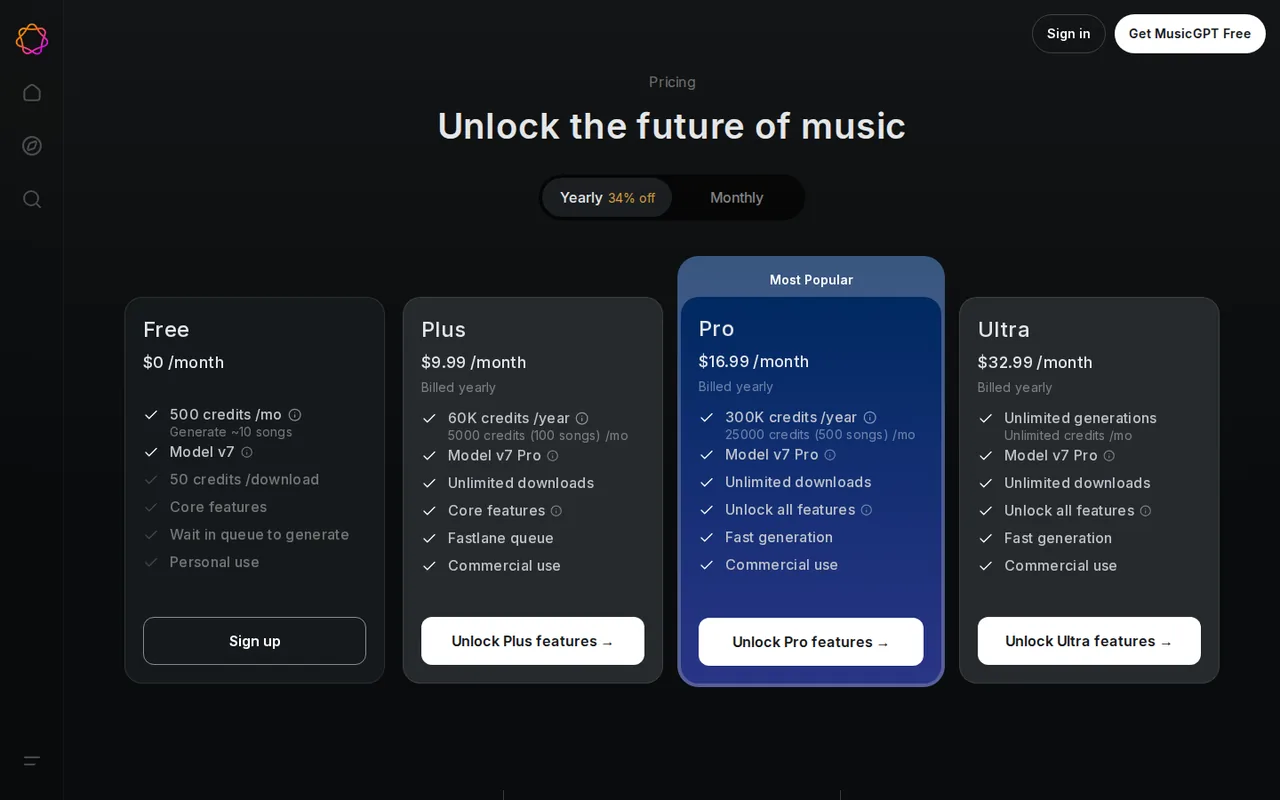
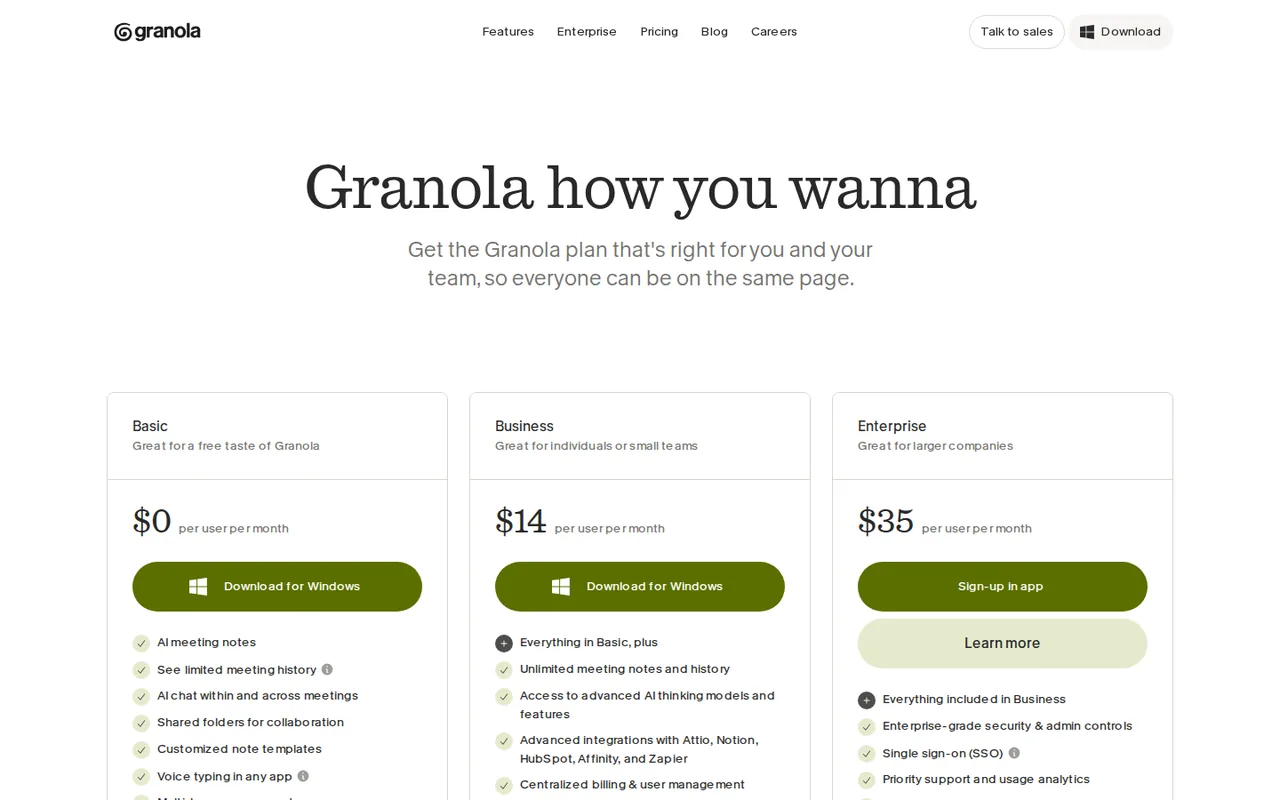
| Free $0 with 500 credits; Plus $11.99 a month ($9.99 billed annually); Pro $21.99 ($16.99 annually); Ultra $49.99 ($32.99 annually) | Pricing model | Basic free with 30 days of history; Business $14 per user a month; Enterprise $35 per user a month |
| 4 | Plans listedDiffers | 3 |
| Not confirmed | Public API | Not confirmed |
| Not confirmed | Card to start | Not confirmed |
| Not confirmed | Open source | Not confirmed |
| What it is for | ||
| Creators who want royalty-free songs, instrumentals or sound effects from a prompt and may need remix, extend or text to speech on a paid plan | Built for | People in back-to-back calls who want to jot a few lines and get structured notes and follow-ups without a bot joining the meeting |
| Audio & voice | CategorySame | Audio & voice |
| Platforms |
|
| Works with |
|
| How current | ||
| Profile sources checked | ||
| Prices confirmed · Nov 13, 2026 | Pricing checkSame | Prices confirmed · Nov 12, 2026 |
Official source check for both tools. No hands-on testing and no score: “Differs” marks a documented difference, not a better tool.
Plans and prices
MusicGPT
Prices confirmed · Nov 13, 2026- FreeUSD 0 per month
- PlusUSD 11.99 per month billed monthlyor $9.99 per month billed annually
- ProUSD 21.99 per month billed monthlyor $16.99 per month billed annually
- UltraUSD 49.99 per month billed monthlyor $32.99 per month billed annually
Granola
Prices confirmed · Nov 12, 2026- BasicUSD 0
- BusinessUSD 14 per user per monthbilling period not stated
- EnterpriseUSD 35 per user per monthbilling period not stated
Strengths and limits
MusicGPT
Strengths
- Free plan with a monthly credit grant: The pricing page lists Free at $0 a month, labelled free forever, with 500 credits and the v7 model.
- Credits translate to songs: The FAQ prices a full song at 50 credits, so the plan size maps to a song count.
- No watermark: The pricing page says generations are not watermarked.
Limits to plan around
- Free plan rights are not stated: The commercial-use answer names paid plans only, so check before using a free-plan song in a project.
- Pricing differs by billing period: The page shows $11.99, $21.99 and $49.99 monthly but lower amounts billed annually, and the annual totals are not shown on the page.
- Free downloads cost credits: The Free plan charges 50 credits per download in addition to the generation cost.
Granola
Strengths
- No bot on the call: The security page says Granola uses your computer audio and does not add a bot to your video call, and works with any meeting platform.
- Free plan with real features: The pricing page lists AI meeting notes, AI chat, shared folders, templates, voice typing and multi-language support on Basic, with meeting history limited to 30 days.
- Audio is not kept: The security page says Granola does not store meeting audio; it keeps the transcript and your notes.
Limits to plan around
- Billing period is not stated: The pricing page shows $14 and $35 per user per month without saying whether they are billed monthly or annually, and no annual discount is shown.
- Basic history stops at 30 days: The comparison table lists 30 days of meeting history on Basic and unlimited on Business and Enterprise.
- Anonymized data trains Granola's models by default: The security page says Granola trains on anonymized data unless you opt out in Settings; Enterprise users have it off by default.
See both products
Start from your task, not from a winner.
Run both tools on the same real task, then compare the result, how much editing it needs and how fast it uses your plan’s allowance.
How we reviewChange this pair
Choose tools
Choose two tools below. You can replace either selection at any time.
Audio & voice
Automation
Coding
Data & spreadsheets
Images & design
Presentations
Research & sources
Video & editing
Website builders
Writing & content
Comparing tools from different categories is fine, and often useful — a writing assistant and a research tool solve different halves of the same job. The table will show you exactly where they diverge.
Questions about comparing tools
How does the comparison work?
Add two tools to the comparison tray from any tool card, then open this page. The table pulls each tool's verified plan details, platforms, strengths and limits from its profile, so both columns carry the same kind of evidence, with a separate source-check date for each tool.
Do you declare a winner?
No. The table sets two tools against each other on documented facts, not on a score. Which one wins depends on your task, your budget and your usage volume — three things we cannot see from here.
Why are some cells empty or marked unverified?
Because we could not confirm that detail on the vendor's own pages. Rather than filling the gap with a figure from elsewhere, we mark it and say why on the tool's profile.
Can I compare more than two tools?
Not at once. Two columns keep the differences readable and force a real decision. Remove either selected tool to replace it, or clear both to start a new pair.
Every figure in the table above comes from the linked profile, where the source and the verification date are listed. Browse all tools or read the editorial policy.