Auphonic vs Pluely
Plans, free access, limits and intended use side by side, taken from each vendor’s own pages. No score and no winner: the facts show where the two differ.
Change tools
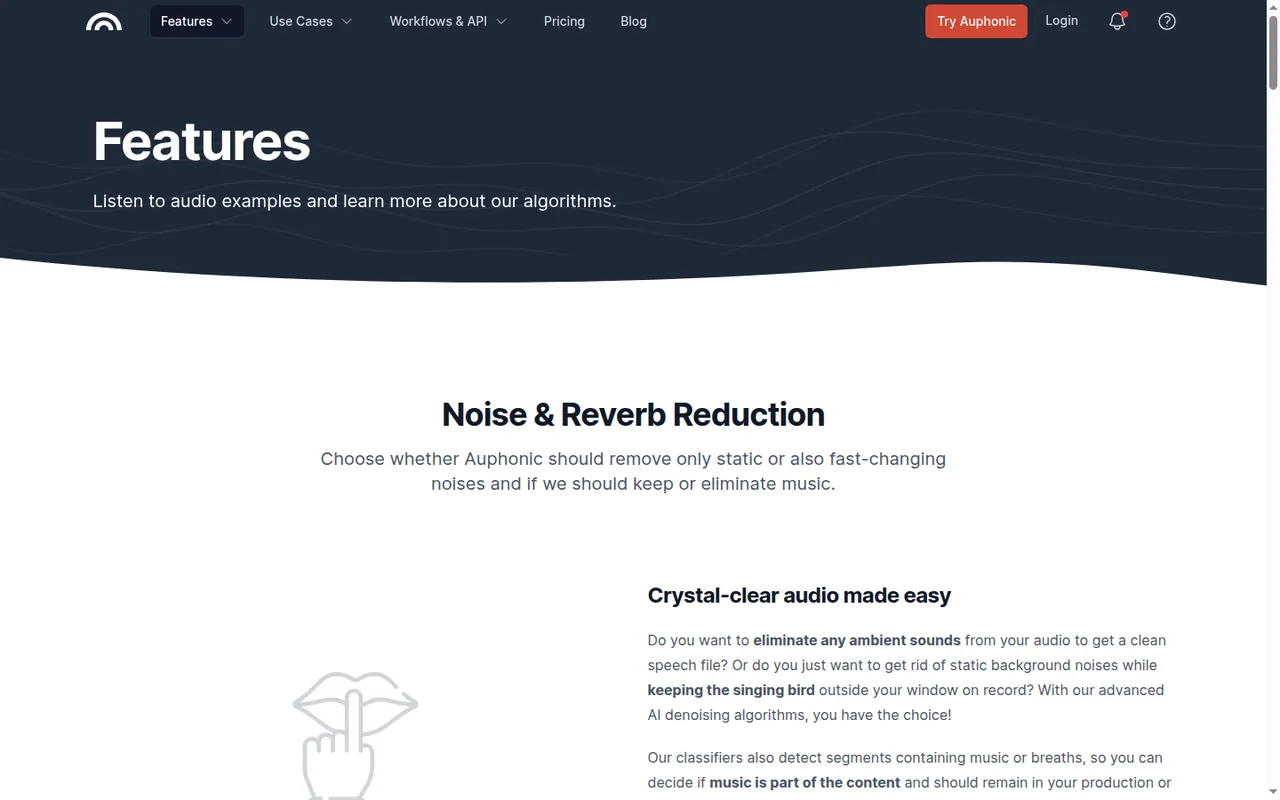
Clean up, level and normalize podcast and video audio automatically, then publish it.

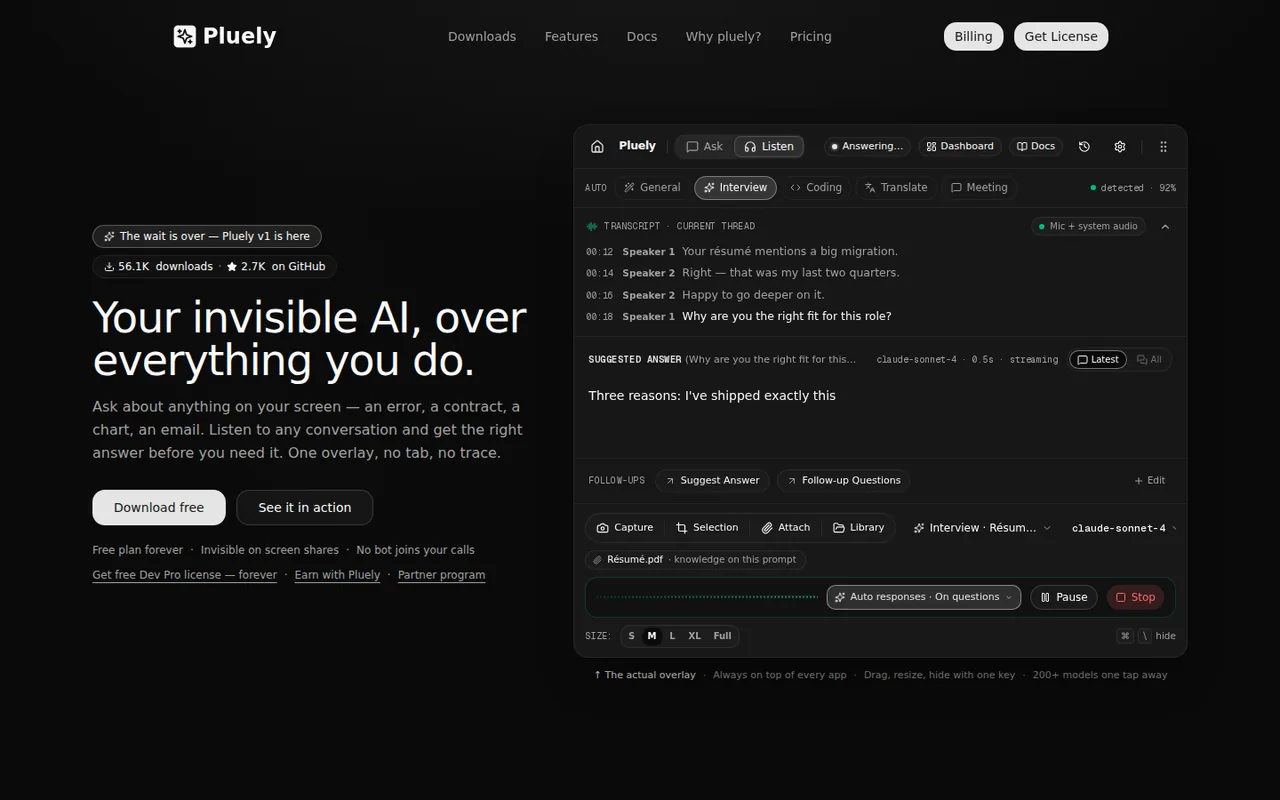
Desktop AI overlay that answers from your screen and live calls
- Free access
- Auphonic: Free access
- Pluely: Free access
- Paid from
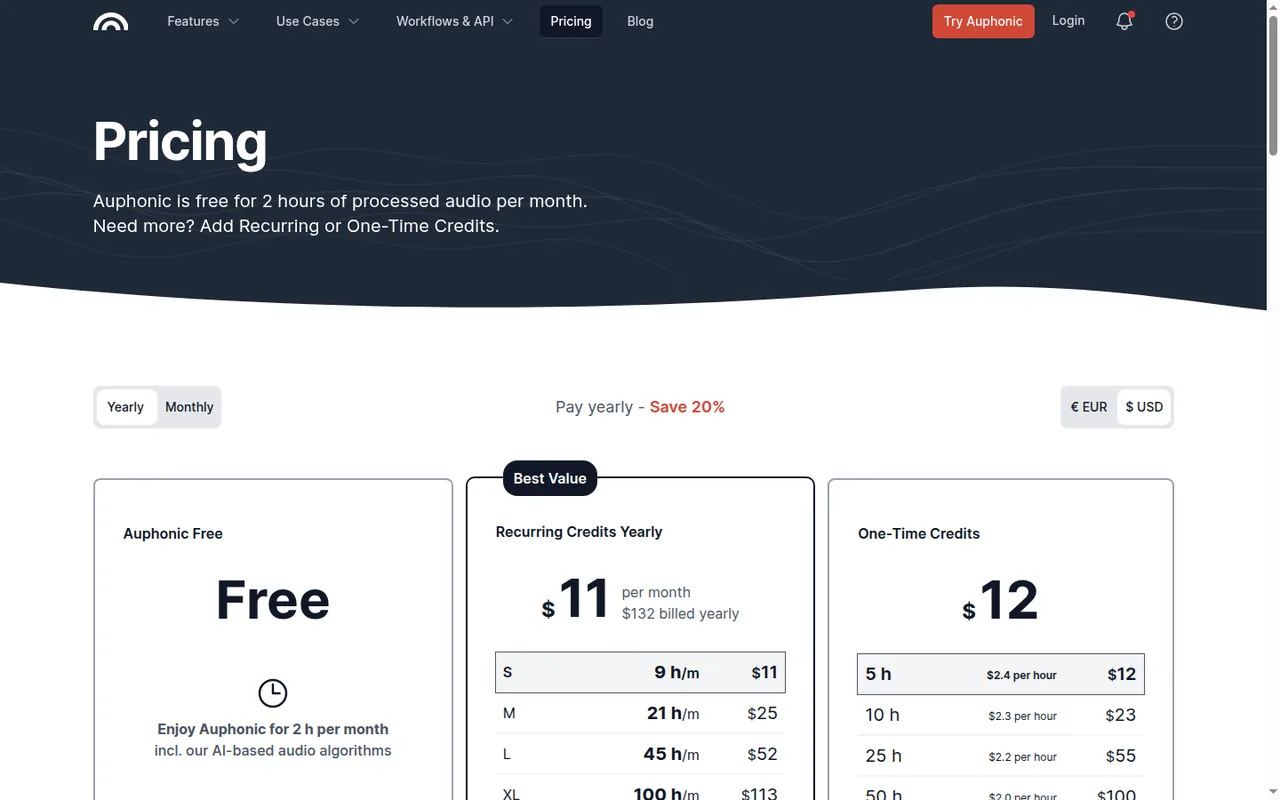
- Auphonic: USD 11 per month
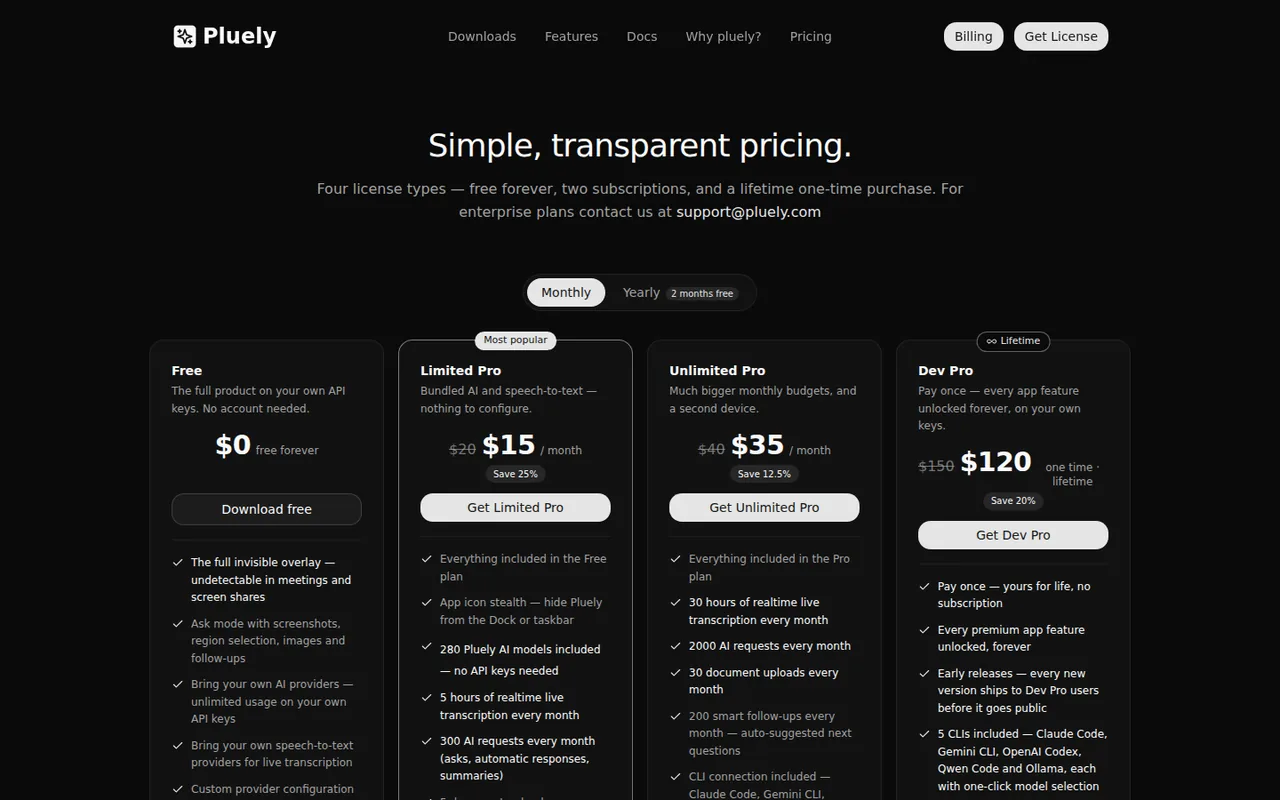
- Pluely: USD 15 per month as listed
- Plans listed
- Auphonic: 7
- Pluely: 4
- Public API
- Auphonic: Yes
- Pluely: Not confirmed
Where Auphonic and Pluely differ
- PlansAuphonic lists 7 plans and Pluely lists 4.
Head to head
Each value from the tool’s profile and the vendor’s own pages
| Auphonic | Fact | Pluely |
|---|---|---|
| Access and price | ||
| Free access availableAuphonic Free | Free accessSame | Free access availableFree · USD 0 |
| USD 11 per monthAuphonic S (recurring) · billed yearly · USD 132 a year; USD 13 billed monthly | Lowest listed paid plan | USD 15 per month as listedLimited Pro · $20 struck through; billing monthly or yearly, period of the $15 not stated |
| Free 2 hours per month; paid recurring or one-time credits | Pricing model | Free on your own keys; bundled AI from $15/month; Dev Pro $120 once |
| 7 | Plans listedDiffers | 4 |
| Yes | Public API | Not confirmed |
| Not required | Card to start | Not confirmed |
| No | Open source | Not confirmed |
| What it is for | ||
| Automatic post production for spoken audio | Built for | People who want screen and call answers from their own AI keys |
| Audio & voice | CategorySame | Audio & voice |
| Platforms |
|
| Works with |
|
| How current | ||
| Profile sources checked | ||
| Pricing review due · Sep 24, 2026 | Pricing checkSame | Pricing review due · Oct 6, 2026 |
Official source check for both tools. No hands-on testing and no score: “Differs” marks a documented difference, not a better tool.
Plans and prices
Auphonic
Pricing review due · Sep 24, 2026- Auphonic FreeFree
- Auphonic S (recurring)USD 11 per monthbilled yearly · USD 132 a year; USD 13 billed monthly
- Auphonic M (recurring)USD 25 per monthbilled yearly · USD 300 a year; USD 30 billed monthly
- Auphonic L (recurring)USD 52 per monthbilled yearly · USD 624 a year; USD 64 billed monthly
- Auphonic XL (recurring)USD 113 per monthbilled yearly · USD 1,356 a year; USD 136 billed monthly
Show 2 more plans
- Auphonic XXL (recurring)USD 245 per monthbilled yearly · USD 2,940 a year; USD 290 billed monthly
- One-Time CreditsUSD 12 for 5 hoursUSD 2.4 an hour, up to USD 2,925 for 3,000 hours · USD 0.975 an hour
Pluely
Pricing review due · Oct 6, 2026- FreeUSD 0
- Limited ProUSD 15 per month as listedUSD 20 struck through; billing monthly or yearly, period of the $15 not stated
- Unlimited ProUSD 35 per month as listedUSD 40 struck through; billing monthly or yearly, period of the $35 not stated
- Dev ProUSD 120 one timeUSD 150 struck through
Strengths and limits
Auphonic
Strengths
- Usable free allowance: Two hours of processed audio each month include the leveler, noise reduction, loudness targets and filler cutting.
- One-time credits never expire: Pay-as-you-go credit packs do not expire, which fits irregular production schedules.
- Re-runs do not cost extra: Changing settings and re-processing the same input files in the same production uses no additional credits.
Limits to plan around
- Jingle on free productions: Productions made by free users come with an Auphonic jingle.
- Monthly hours do not roll over: Unused free and recurring credits are lost at the monthly reset.
- Transcripts and shownotes are paid: Speech recognition and automatic shownotes and chapters are not part of the free plan.
Pluely
Strengths
- Free plan has no time limit: The pricing page lists Free at $0 forever with the full overlay and unlimited use on your own keys, with no signup.
- Your own keys or local CLIs: You can connect any OpenAI-compatible endpoint or run Claude Code, Gemini CLI, Codex, Qwen Code or Ollama.
- Local storage of history: The docs say chats, transcripts and files stay on your device.
Limits to plan around
- Refund wording differs: The pricing page says purchases are final after activation; the terms say refund requests go through support.
- Billing period of the discounted price is unclear: Paid plans show a struck-through price and a lower figure, with billing 'monthly or yearly', but no yearly total.
- Model count is inconsistent: Official pages say 100+, 200+ and 280 bundled models.
See both products
Start from your task, not from a winner.
Run both tools on the same real task, then compare the result, how much editing it needs and how fast it uses your plan’s allowance.
How we reviewChange this pair
Choose tools
Choose two tools below. You can replace either selection at any time.
Audio & voice
Automation
Coding
Data & spreadsheets
Images & design
Presentations
Research & sources
Video & editing
Website builders
Writing & content
Comparing tools from different categories is fine, and often useful — a writing assistant and a research tool solve different halves of the same job. The table will show you exactly where they diverge.
Questions about comparing tools
How does the comparison work?
Add two tools to the comparison tray from any tool card, then open this page. The table pulls each tool's verified plan details, platforms, strengths and limits from its profile, so both columns carry the same kind of evidence, with a separate source-check date for each tool.
Do you declare a winner?
No. The table sets two tools against each other on documented facts, not on a score. Which one wins depends on your task, your budget and your usage volume — three things we cannot see from here.
Why are some cells empty or marked unverified?
Because we could not confirm that detail on the vendor's own pages. Rather than filling the gap with a figure from elsewhere, we mark it and say why on the tool's profile.
Can I compare more than two tools?
Not at once. Two columns keep the differences readable and force a real decision. Remove either selected tool to replace it, or clear both to start a new pair.
Every figure in the table above comes from the linked profile, where the source and the verification date are listed. Browse all tools or read the editorial policy.