Julius AI vs Particl
Plans, free access, limits and intended use side by side, taken from each vendor’s own pages. No score and no winner: the facts show where the two differ.
Change tools
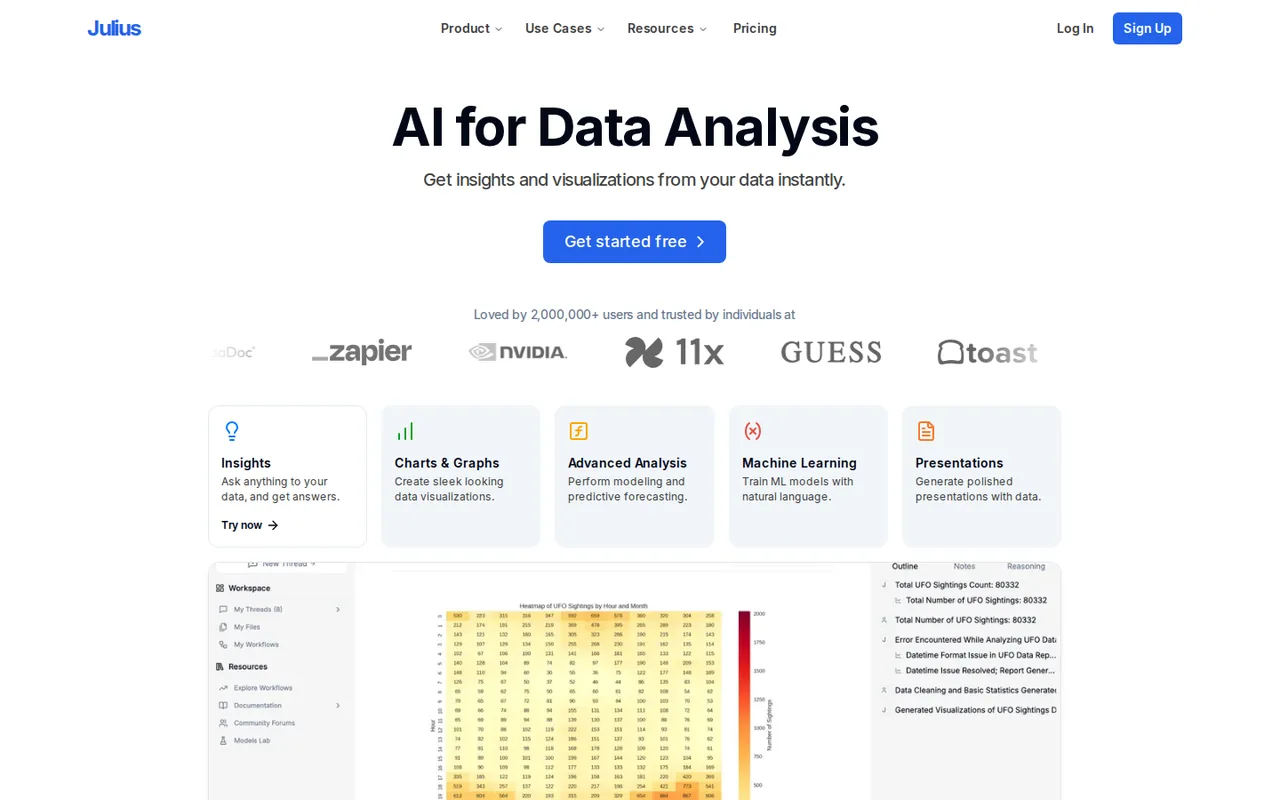
Chat-based analysis of spreadsheets, CSV files and databases, metered in credits

Pick the plan by history window and competitor list
- Free access
- Julius AI: Free access
- Particl: Free trial only
- Paid from
- Julius AI: USD 20 per month billed monthly
- Particl: USD 250 per month
- Plans listed
- Julius AI: 5
- Particl: 5
- Public API
- Julius AI: Not confirmed
- Particl: Yes
Where Julius AI and Particl differ
- AccessJulius AI offers free access, while Particl offers a free trial only.
Head to head
Each value from the tool’s profile and the vendor’s own pages
| Julius AI | Fact | Particl |
|---|---|---|
| Access and price | ||
| Free access availableFree · USD 0 | Free accessDiffers | Free trial only |
| USD 20 per month billed monthlyPlus · or $16 per month billed annually | Lowest listed paid plan | USD 250 per monthStarter · billed monthly · or $208 per month billed once yearly |
| Free plan; Plus from $16/month billed annually | Pricing model | 14-day trial with card; paid from $250/month |
| 5 | Plans listedSame | 5 |
| Not confirmed | Public API | Yes |
| Not confirmed | Card to start | Required |
| Not confirmed | Open source | No |
| What it is for | ||
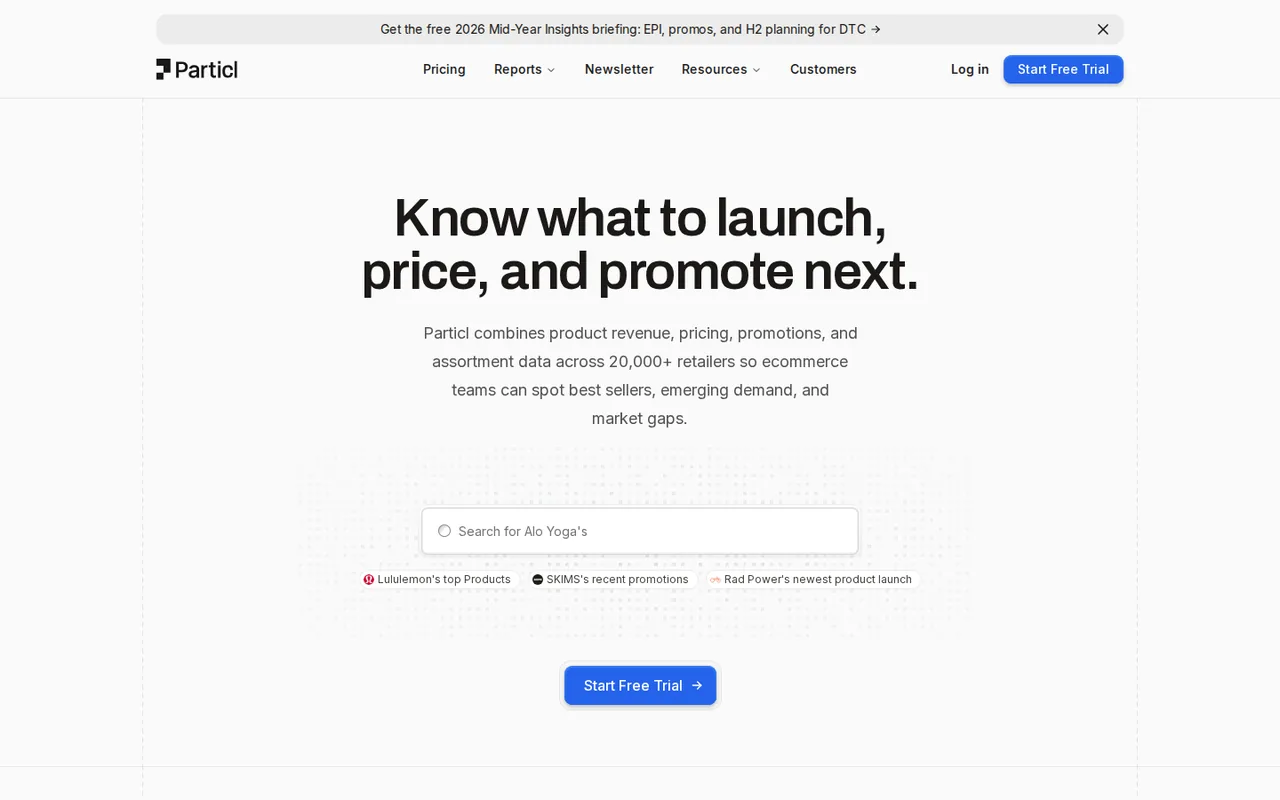
| Asking questions of spreadsheets and databases in chat and exporting the charts | Built for | Competitor sales, pricing and assortment research for ecommerce brands |
| Data & spreadsheets | CategorySame | Data & spreadsheets |
| Platforms |
|
| Works with |
|
| How current | ||
| Profile sources checked | ||
| Prices confirmed · Oct 24, 2026 | Pricing checkSame | Prices confirmed · Sep 29, 2026 |
Official source check for both tools. No hands-on testing and no score: “Differs” marks a documented difference, not a better tool.
Plans and prices
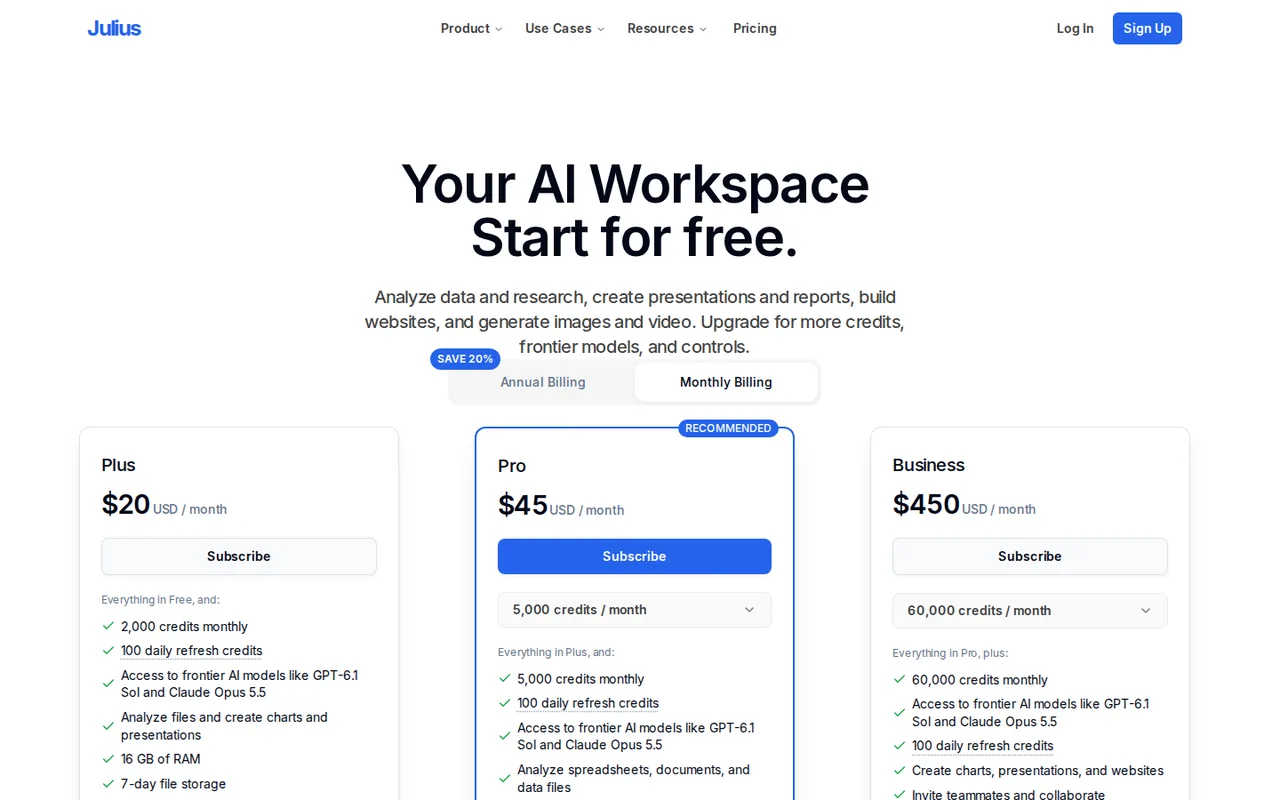
Julius AI
Prices confirmed · Oct 24, 2026- FreeUSD 0
- PlusUSD 20 per month billed monthlyor $16 per month billed annually
- ProUSD 45 per month billed monthlyor $37 per month billed annually
- BusinessUSD 450 per month billed monthlyor $375 per month billed annually
- EnterpriseContact sales
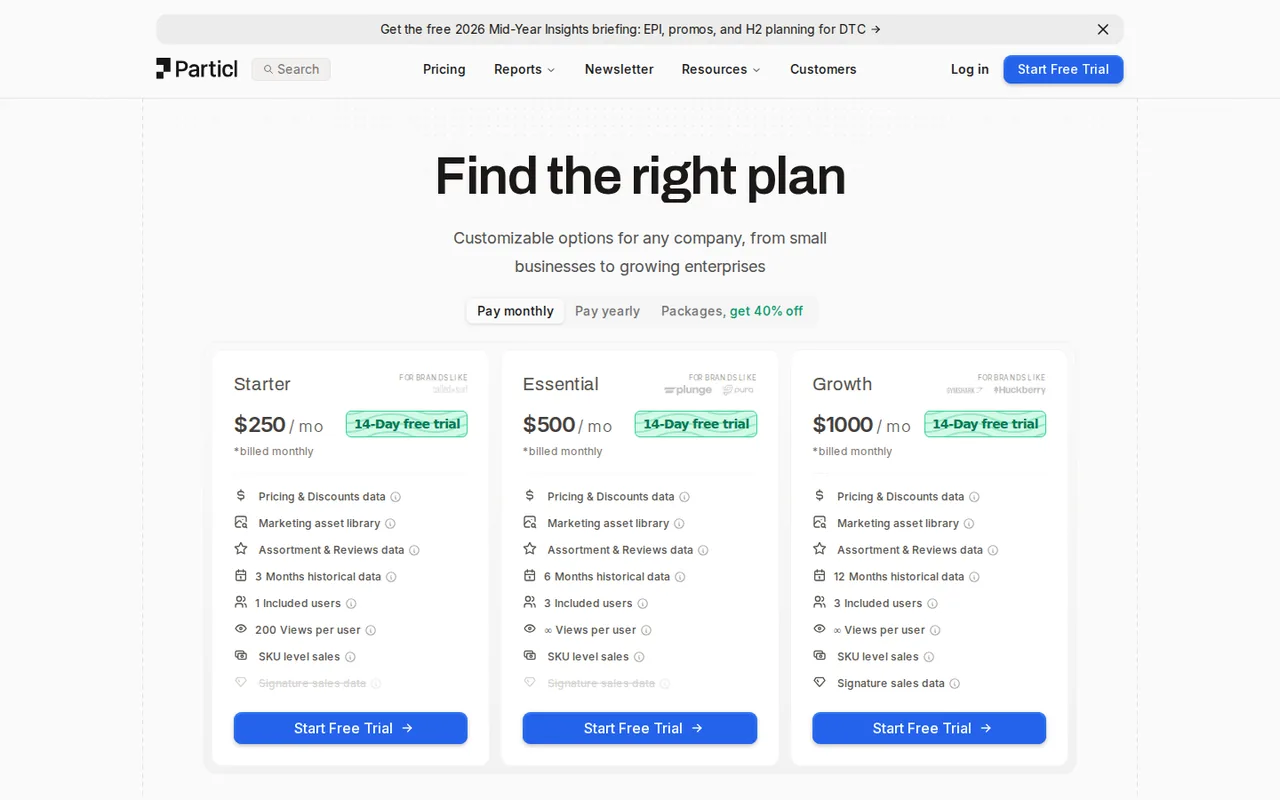
Particl
Prices confirmed · Sep 29, 2026- StarterUSD 250 per monthbilled monthly · or $208 per month billed once yearly
- EssentialUSD 500 per monthbilled monthly · or $417 per month billed once yearly
- GrowthUSD 1,000 per monthbilled monthly · or $833 per month billed once yearly
- Growth + Product Development PackageUSD 1,800 one-time paymentlisted against $3,000
- CustomContact sales
Strengths and limits
Julius AI
Strengths
- Credit allowances are published: The credits documentation lists welcome, daily and monthly credits for every plan, including legacy ones.
- Live database queries: Connectors for Postgres, MySQL, SQL Server, Snowflake, BigQuery and Supabase avoid exporting a file before each analysis.
- Daily credits on paid plans: Paid accounts get 100 daily credits, used before the purchased balance.
Limits to plan around
- Cost per message unknown: Credit use varies by action, model and data size, and no per-task figure is published.
- Free files expire after an hour: Free-tier uploads and generated files are deleted after 1 hour of inactivity.
- No credit top-ups: Buying extra credits is not supported; more usage means a higher plan.
Particl
Strengths
- Plan limits are published: History months, users, competitors, views and export credits are listed per tier.
- Some tools cost nothing: Company search, the product-type tree and the credit balance check are free MCP calls.
- Read-only AI connector: The MCP documentation says the connector cannot read chats, files or store data.
Limits to plan around
- No free plan, card for the trial: The 14-day trial requires a payment method and bills automatically when it ends.
- Sales are estimates: The documentation calls them sales estimates, and the terms disclaim data accuracy.
- Strict renewal terms: The terms require cancellation 30 days before renewal and rule out refunds for partial periods.
See both products
Start from your task, not from a winner.
Run both tools on the same real task, then compare the result, how much editing it needs and how fast it uses your plan’s allowance.
How we reviewChange this pair
Choose tools
Choose two tools below. You can replace either selection at any time.
Audio & voice
Automation
Coding
Data & spreadsheets
Images & design
Presentations
Research & sources
Video & editing
Website builders
Writing & content
Comparing tools from different categories is fine, and often useful — a writing assistant and a research tool solve different halves of the same job. The table will show you exactly where they diverge.
Questions about comparing tools
How does the comparison work?
Add two tools to the comparison tray from any tool card, then open this page. The table pulls each tool's verified plan details, platforms, strengths and limits from its profile, so both columns carry the same kind of evidence, with a separate source-check date for each tool.
Do you declare a winner?
No. The table sets two tools against each other on documented facts, not on a score. Which one wins depends on your task, your budget and your usage volume — three things we cannot see from here.
Why are some cells empty or marked unverified?
Because we could not confirm that detail on the vendor's own pages. Rather than filling the gap with a figure from elsewhere, we mark it and say why on the tool's profile.
Can I compare more than two tools?
Not at once. Two columns keep the differences readable and force a real decision. Remove either selected tool to replace it, or clear both to start a new pair.
Every figure in the table above comes from the linked profile, where the source and the verification date are listed. Browse all tools or read the editorial policy.