Kilo Code vs GitHub Copilot
Plans, free access, limits and intended use side by side, taken from each vendor’s own pages. No score and no winner: the facts show where the two differ.
Change tools
Open-source AI coding agent for VS Code, JetBrains, the terminal and the cloud, with free models, your own keys or pay-as-you-go credits

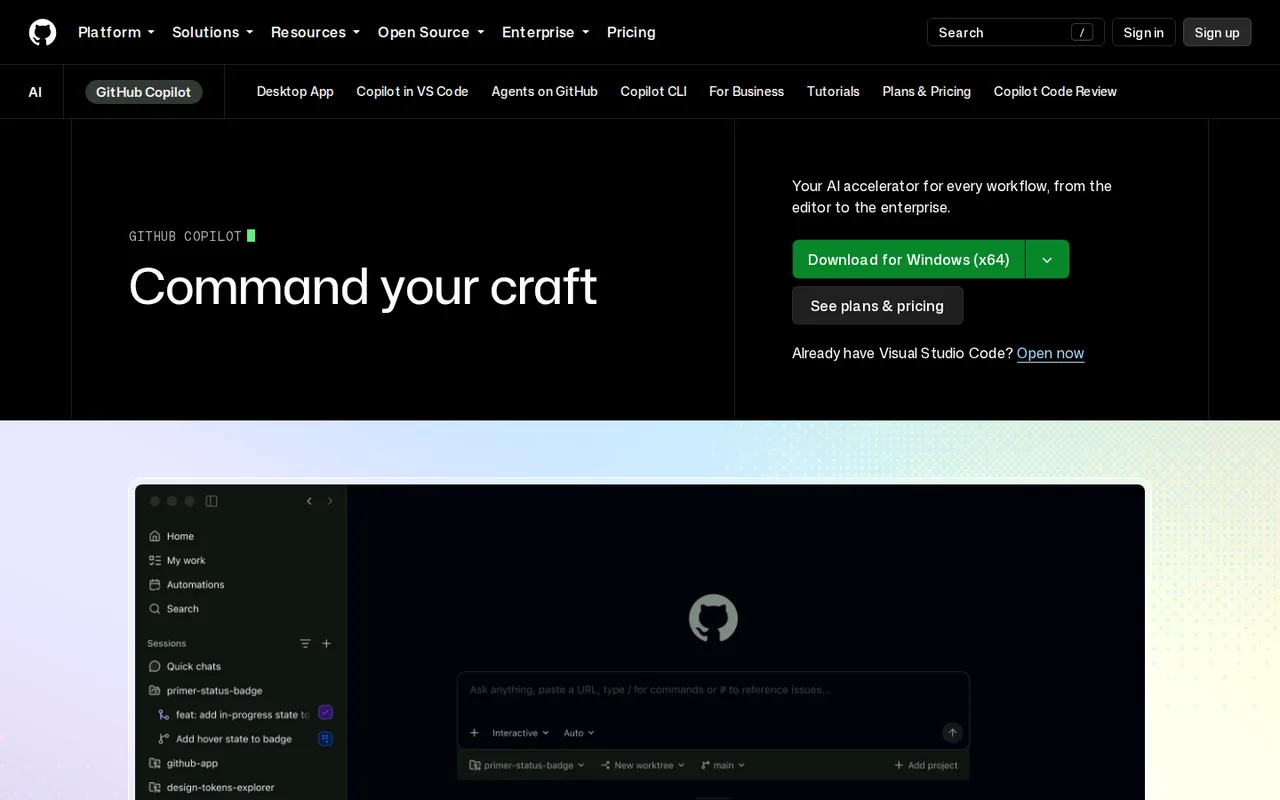
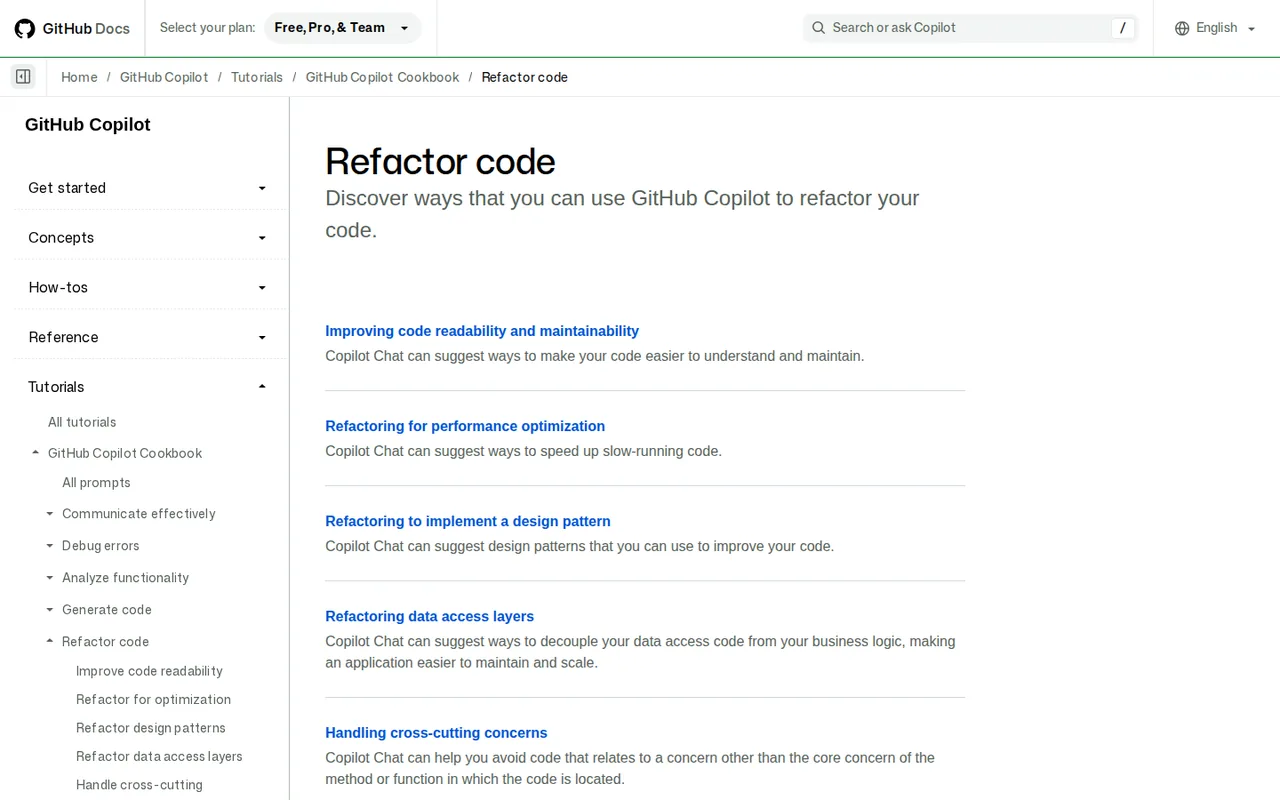
Coding assistance inside your editor, with a separate cloud agent for GitHub repositories.
- Free access
- Kilo Code: Free access
- GitHub Copilot: Free access
- Paid from
- Kilo Code: USD 0.33 to $1.20 per hour
- GitHub Copilot: USD 10 per person per month
- Plans listed
- Kilo Code: 9
- GitHub Copilot: 4
- Public API
- Kilo Code: Not confirmed
- GitHub Copilot: Yes
Where Kilo Code and GitHub Copilot differ
- Pricing checkPrices confirmed for Kilo Code; pricing review due for GitHub Copilot.
- PlansKilo Code lists 9 plans and GitHub Copilot lists 4.
Head to head
Each value from the tool’s profile and the vendor’s own pages
| Kilo Code | Fact | GitHub Copilot |
|---|---|---|
| Access and price | ||
| Free access availableFree and open source · USD 0 | Free accessSame | Free access availableFree · USD 0 |
| USD 0.33 to $1.20 per hourCloud compute · billed per second | Lowest listed paid plan | USD 10 per person per monthPro · monthly subscription |
| Free open-source agent; models paid separately (free, own keys or credits); Kilo Pass from $19/month; Teams $15/user/month | Pricing model | Free access; individual Pro USD 10 per month |
| 9 | Plans listedDiffers | 4 |
| Not confirmed | Public API | Yes |
| Not confirmed | Card to start | Not required |
| Not confirmed | Open source | No |
| What it is for | ||
| Developers who want one open-source coding agent across editor, terminal and cloud, and are comfortable managing model spend separately from the tool | Built for | Reviewing small code changes in an existing editor |
| Coding | CategorySame | Coding |
| Platforms |
|
| Works with |
|
| How current | ||
| Profile sources checked | ||
| Prices confirmed · Nov 5, 2026 | Pricing checkDiffers | Pricing review due · Oct 2, 2026 |
Official source check for both tools. No hands-on testing and no score: “Differs” marks a documented difference, not a better tool.
Plans and prices
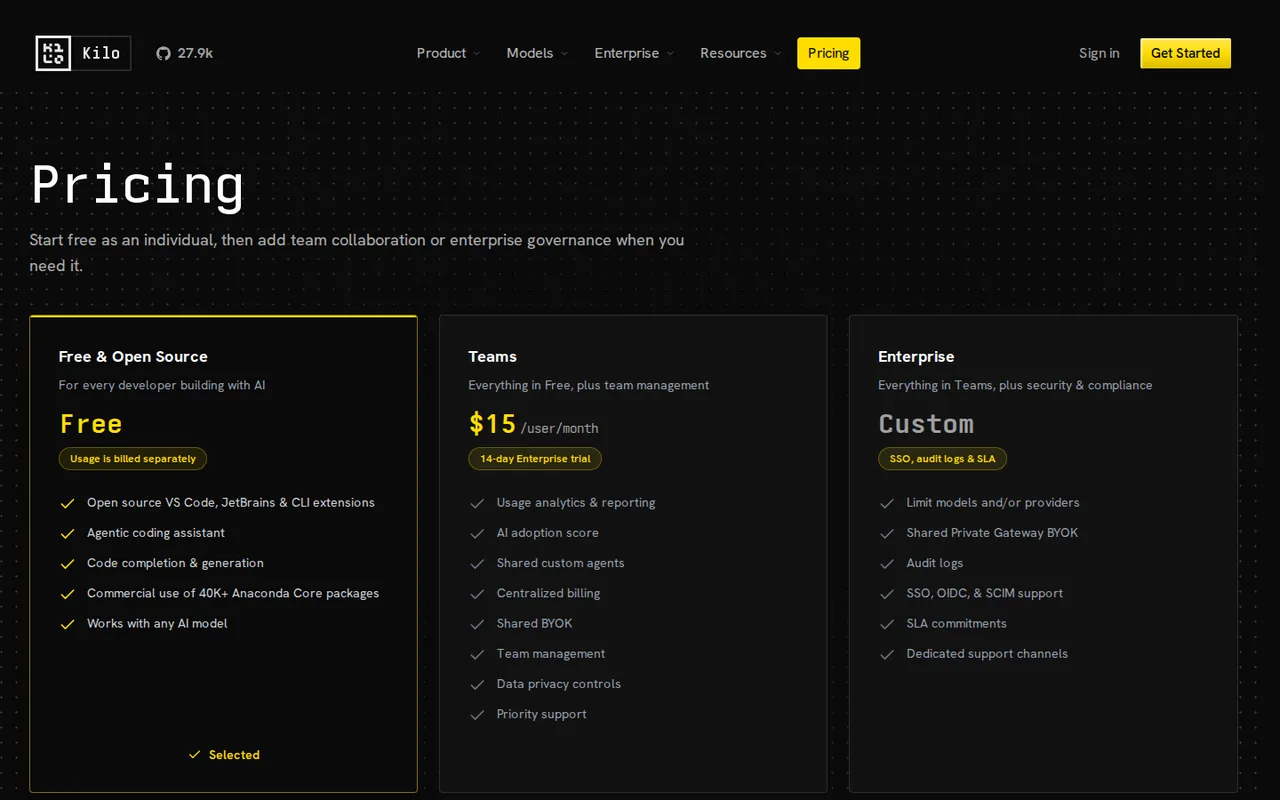
Kilo Code
Prices confirmed · Nov 5, 2026- Free and open sourceUSD 0
- Auto Free, BYOK or localUSD 0 a month
- Kilo GatewayUSD 0 a month plus usage
- Kilo Pass StarterUSD 19 per month
- Kilo Pass ProUSD 49 per month
Show 4 more plans
- Kilo Pass ExpertUSD 199 per month
- TeamsUSD 15 per user per month
- EnterpriseCustom
- Cloud computeUSD 0.33 to $1.20 per hourbilled per second
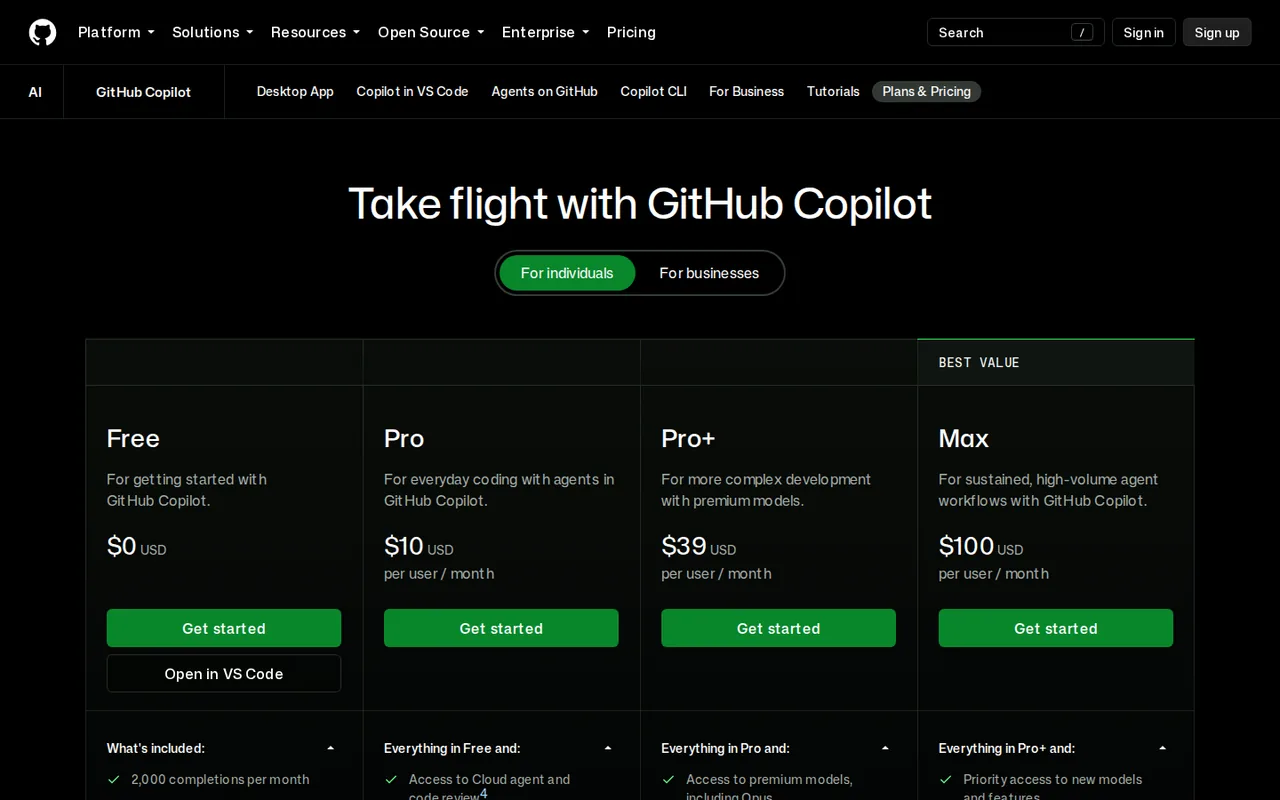
GitHub Copilot
Pricing review due · Oct 2, 2026- FreeUSD 0
- ProUSD 10 per person per monthmonthly subscription
- Pro+USD 39 per person per monthmonthly subscription
- MaxUSD 100 per person per monthmonthly subscription
Strengths and limits
Kilo Code
Strengths
- Free open-source clients: The VS Code extension, JetBrains plugin and CLI are MIT-licensed and free to install, with no mandatory subscription for individuals.
- Many ways to pay for models: Free models, local models, your own provider keys or Gateway credits at provider rates, so you can avoid Kilo inference spend entirely.
- Several surfaces, one agent: The same agent is offered in VS Code, JetBrains, the terminal, the cloud and Slack, and cloud sessions can be resumed locally per the FAQ.
Limits to plan around
- Total cost is not one number: Platform, model inference, a 5% processing fee on top-ups and cloud compute are billed as separate parts, so a monthly bill has to be assembled.
- Cloud compute is extra even with your own keys: The pricing FAQ says bringing your own keys covers model inference, not the container that runs a cloud agent.
- Paid credits expire: Paid credits, including automatic top-ups, expire one calendar year after purchase; the 5% processing fee is non-refundable.
GitHub Copilot
Strengths
- Keep the current editor: Supported IDE integrations let a developer evaluate assistance without replacing the entire coding environment.
- Separate local and delegated work: Chat, local agent mode and the cloud agent address different levels of repository work.
- Visible billing units: The individual billing documentation explains credit conversion, base allowance and variable flex allotment.
Limits to plan around
- Free is not unlimited agent work: Free has limited chat and agent usage; cloud agent and code review require paid access.
- Variable interaction cost: Long context, model choice and repeated edits change credit consumption.
- Exclusion gaps: Content exclusion is not supported in Edit or Agent modes; do not treat a file policy as a universal boundary.
See both products
Start from your task, not from a winner.
Run both tools on the same real task, then compare the result, how much editing it needs and how fast it uses your plan’s allowance.
How we reviewChange this pair
Choose tools
Choose two tools below. You can replace either selection at any time.
Audio & voice
Automation
Coding
Data & spreadsheets
Images & design
Presentations
Research & sources
Video & editing
Website builders
Writing & content
Comparing tools from different categories is fine, and often useful — a writing assistant and a research tool solve different halves of the same job. The table will show you exactly where they diverge.
Questions about comparing tools
How does the comparison work?
Add two tools to the comparison tray from any tool card, then open this page. The table pulls each tool's verified plan details, platforms, strengths and limits from its profile, so both columns carry the same kind of evidence, with a separate source-check date for each tool.
Do you declare a winner?
No. The table sets two tools against each other on documented facts, not on a score. Which one wins depends on your task, your budget and your usage volume — three things we cannot see from here.
Why are some cells empty or marked unverified?
Because we could not confirm that detail on the vendor's own pages. Rather than filling the gap with a figure from elsewhere, we mark it and say why on the tool's profile.
Can I compare more than two tools?
Not at once. Two columns keep the differences readable and force a real decision. Remove either selected tool to replace it, or clear both to start a new pair.
Every figure in the table above comes from the linked profile, where the source and the verification date are listed. Browse all tools or read the editorial policy.